15 Best Piano Books for Adult Beginners
Last Updated: February 16, 2026
Learning piano as an adult is one of the most rewarding journeys you can embark on, but choosing the right piano book can feel overwhelming. With dozens of method books claiming to be "the best," how do you know which one will actually work for you?
You're not alone in this search. Every week, hundreds of adults ask the same question: "What's the best piano book for adult beginners?"
The answer isn't one-size-fits-all—it depends on your learning style, musical goals, and whether you're working with a teacher or teaching yourself.
As a piano instructor who's worked with over 400 adult beginners, I've personally tested every major piano method book on the market. I've seen which books help students progress confidently and which ones collect dust on the shelf.
This guide reviews the 15 best piano books for adult beginners, helping you find your perfect match.
Table of Contents
- Quick Comparison: Top 5 Piano Books at a Glance
- How to Choose the Best Piano Book for Your Needs
- Top 15 Piano Books for Adult Beginners
- 1. Faber Adult Piano Adventures All-in-One Course Book 1
- 2. Alfred's Basic Adult All-in-One Course Book 1
- 3. Bastien Piano for Adults Book 1
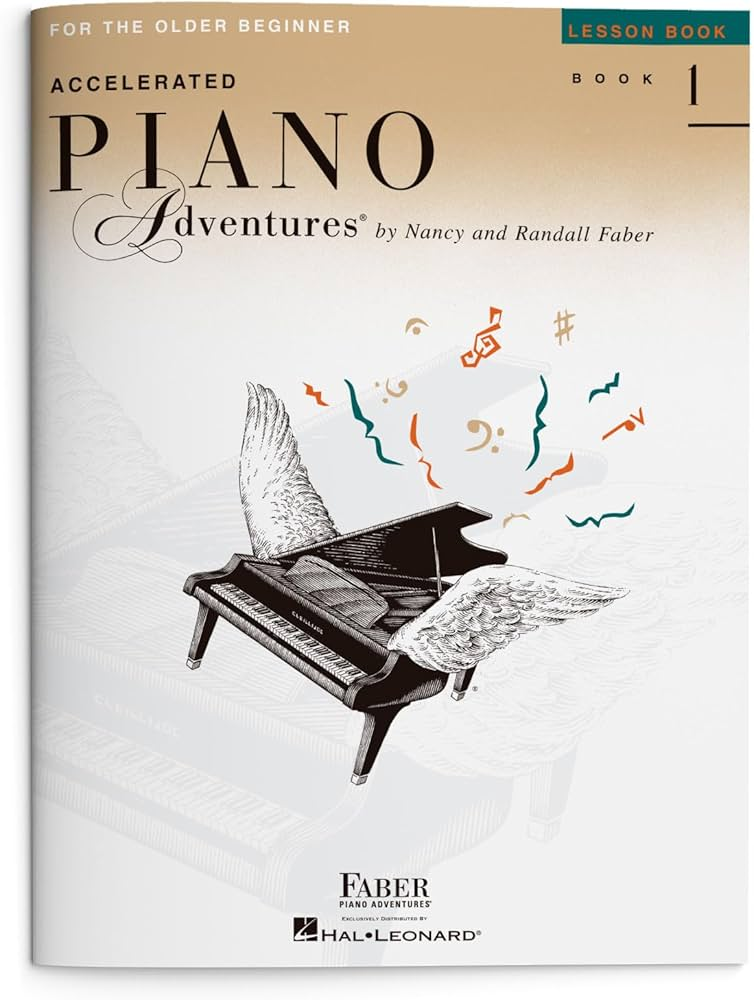
- 4. Piano Adventures Accelerated Book 1
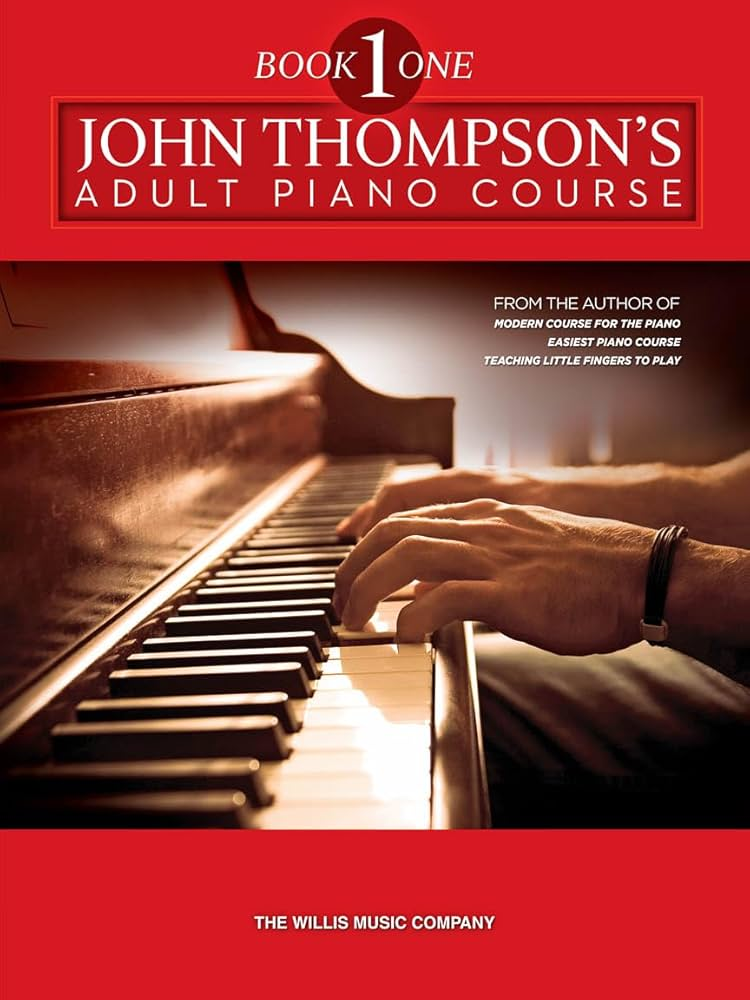
- 5. John Thompson's Adult Piano Course Book 1
- 6. Hal Leonard Student Piano Library: Adult Piano Method Book 1
- 7. Piano Safari for the Older Beginner
- 8. The Classical Piano Method: Method Book 1
- 9. Piano Book for Adult Beginners (Damon Ferrante)
- 10. Pam Wedgwood: It's Never Too Late to Play Piano
- 11-15. Additional Worthy Mentions
- Supplemental Materials You'll Need
- Piano Method Books by Learning Goal
- Common Mistakes When Choosing Piano Books
- How to Get the Most from Your Piano Book
- Frequently Asked Questions
- What is the best piano book for adult beginners?
- Can I really teach myself piano from a book?
- How long does it take to complete Book 1?
- Do I need a real piano or will a keyboard work?
- What's the difference between adult and children's piano books?
- Should I buy physical books or digital versions?
- How much should I spend on piano books?
- Can I skip the theory parts and just play songs?
- What if I'm over 60, am I too old?
- Do these books work with digital pianos?
- Start Your Piano Journey Today
In this guide, you'll discover:
- Expert reviews of the top 15 adult piano method books
- A quick comparison table to find your ideal book in seconds
- How to choose based on your specific goals and learning style
- Common mistakes to avoid when selecting piano books
- Practical tips to maximize your learning experience
Quick Comparison: Top 5 Piano Books at a Glance
Before diving into detailed reviews, here's a snapshot of the five most popular piano books for adult beginners:
| Book | Best For | Price | Difficulty Curve | Theory Included | Multimedia | Our Rating |
|---|---|---|---|---|---|---|
| Faber Adult Piano Adventures Book 1 | Well-rounded beginners wanting comprehensive instruction | $19.99 | Gradual | ⭐⭐⭐⭐⭐ | QR codes, videos | ⭐⭐⭐⭐⭐ |
| Alfred's Basic Adult All-in-One | Theory-focused learners, detailed instruction | $19.99 | Fast | ⭐⭐⭐⭐⭐ | DVD/CD available | ⭐⭐⭐⭐½ |
| Bastien Piano for Adults Book 1 | Ambitious learners who enjoy challenge | $19.99 | Moderate-Fast | ⭐⭐⭐⭐ | Practice Studio app | ⭐⭐⭐⭐½ |
| Piano Adventures Accelerated | Quick learners, teens & younger adults | $12.99 | Moderate | ⭐⭐⭐⭐ | Online resources | ⭐⭐⭐⭐ |
| John Thompson's Adult Course | Classical music enthusiasts | $12.99 | Fast | ⭐⭐ | None | ⭐⭐⭐⭐ |
Prices accurate as of February 2026. May vary by retailer.
Can't decide? Most adult beginners succeed with either Faber Adult Piano Adventures (best for self-teaching) or Alfred's All-in-One (best with a teacher). If budget is tight, John Thompson offers excellent value.
How to Choose the Best Piano Book for Your Needs
Not all piano books are created equal, and what works perfectly for one person might frustrate another. Here's how to find your ideal match.
Understanding Your Learning Style
Self-Directed Learners need books with:
- Crystal-clear explanations that don't assume prior knowledge
- Abundant multimedia resources (video demonstrations, audio tracks)
- Self-check exercises and review sections
- Gradual pacing to build confidence independently
Teacher-Guided Learners can use books with:
- Faster progression (teacher fills in gaps)
- Teacher accompaniment parts
- Less repetitive exercises (teacher provides additional practice)
- More advanced theory integration
Visual Learners benefit from:
- Generous use of diagrams and keyboard illustrations
- Color-coded notes in early stages
- Video demonstrations of hand positions
- Clear visual representation of concepts
Analytical Learners prefer:
- Detailed theory explanations
- Understanding the "why" behind techniques
- Written exercises and worksheets
- Systematic, logical progression
Key Features to Look For
All-in-One vs. Separate Books
All-in-one books combine lesson material, theory, and technique in a single volume. They're convenient and cost-effective but may feel cramped or overwhelming. Best for: Self-taught learners who want simplicity.
Separate book series include individual lesson books, theory workbooks, and technique books. They offer deeper coverage of each topic but cost more and require juggling multiple resources. Best for: Students working with teachers who can guide through multiple materials.
Multimedia Resources Matter
Modern piano books should include:
- QR codes linking to video demonstrations
- Audio recordings of pieces to hear correct interpretation
- Play-along tracks to make practice more engaging
- Online practice tools for interactive learning
Books without multimedia support aren't inherently bad, but they're harder to use for self-teaching. If you're learning independently, prioritize books with robust digital resources.
Song Repertoire Quality
Here's an uncomfortable truth: Many piano method books include boring songs, especially in early lessons. You'll encounter countless folk tunes and nursery rhymes.
Why? Copyright restrictions. Publishers can't include modern pop songs without expensive licensing, so they stick to public domain music.
However, some books do better than others:
- Best repertoire: Faber, Bastien (original compositions sound better)
- Classical focus: John Thompson, Piano Safari (beautiful traditional pieces)
- Weakest repertoire: Generic methods with only folk songs
Pro tip: Supplement your method book with a popular songs collection once you've progressed past the first few units.
Pacing: Not Too Fast, Not Too Slow
Adult piano books walk a fine line. Progress too slowly and you'll feel patronized; too quickly and you'll feel overwhelmed.
- Gradual pacing: Faber Adult Piano Adventures, Hal Leonard Adult Method
- Moderate pacing: Bastien, Piano Adventures Accelerated
- Fast pacing: Alfred's All-in-One, John Thompson's
Consider your practice commitment:
- 15-30 minutes daily: Choose gradual or moderate pacing
- 45+ minutes daily: You can handle faster-paced books
- Inconsistent practice: Definitely choose gradual pacing
Adult Piano Books vs. Children's Methods
"Can't I just use a kids' piano book?" You technically could, but you shouldn't. Here's why:
Pacing Differences
- Children's books progress extremely slowly (designed for developing motor skills over years)
- Adult books condense the same material into fewer lessons (adult brains grasp concepts faster)
- Children's methods may take 2-3 years for content adults cover in 6-12 months
Content Maturity
- Kids' books feature cartoon characters and childish themes
- Adult books use sophisticated design and mature musical selections
- Lyrics and themes are age-appropriate for grown-ups
Teaching Approach
- Children's methods use more rote learning and games
- Adult books explain the "why" behind concepts
- Adult materials assume analytical thinking skills
Bottom line: Use books designed for adults. You'll progress faster and stay more engaged.
Top 15 Piano Books for Adult Beginners
Now for the detailed reviews. Each book has been personally tested with students ranging from ages 25 to 78, complete beginners to returning players.
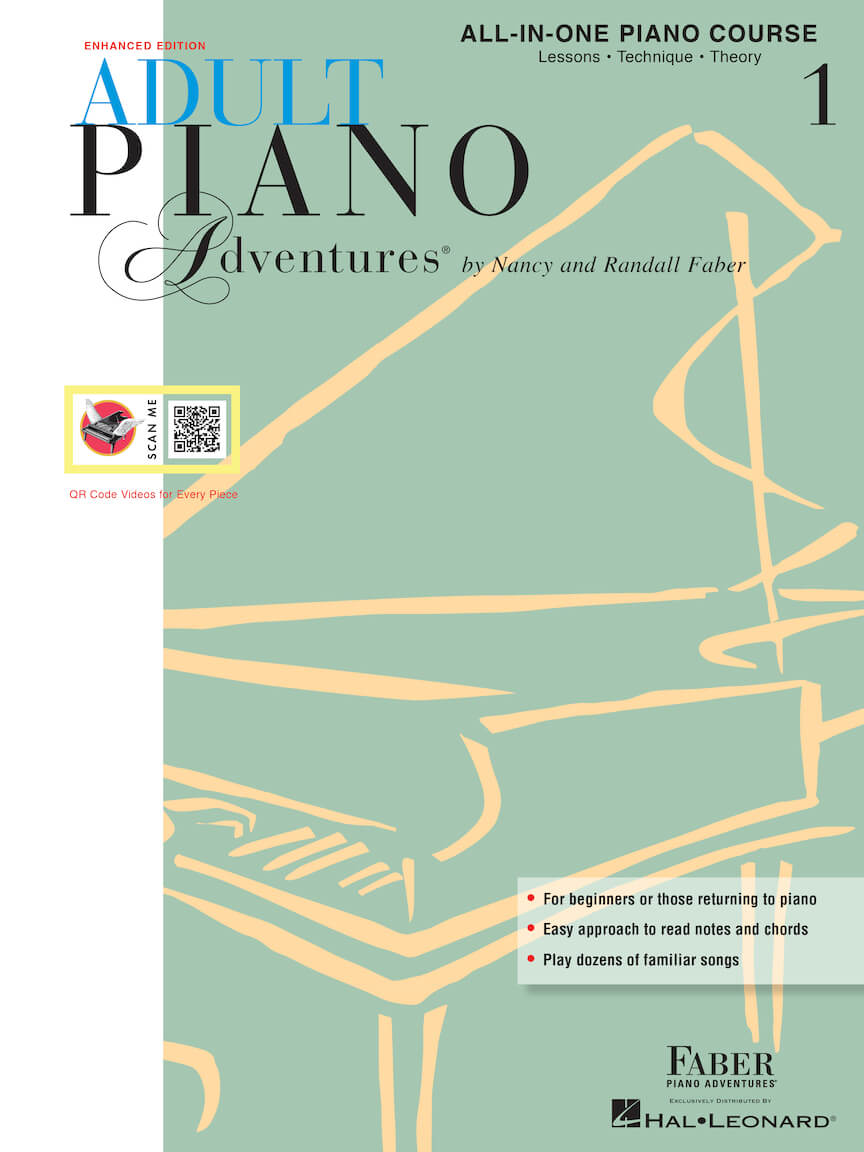
1. Faber Adult Piano Adventures All-in-One Course Book 1
Authors: Nancy and Randall Faber
Publisher: Faber Piano Adventures
Price: $19.99
Format: Spiral-bound, 192 pages
Multimedia: QR codes to video lessons, online accompaniment tracks
Overview
The gold standard for adult piano instruction, Faber Adult Piano Adventures is the most popular method book for good reason. This comprehensive all-in-one course combines lessons, theory, and technique into a beautifully designed spiral-bound book that lays flat on your music stand.
Best For: Complete beginners who want a well-rounded, systematic approach to piano. Ideal for self-taught learners due to excellent multimedia resources and clear explanations.
What Makes It Stand Out
Faber excels at introducing concepts gradually without feeling patronizing. You'll start playing with both hands immediately, and the book teaches you to read both standard notation AND chord symbols—essential for playing contemporary music. The 16-unit structure provides natural stopping points and a clear sense of progress.
The book's greatest strength is its multimedia integration. Scan any QR code and you'll access professional video demonstrations, play-along tracks, and instructional content. For self-taught adults, this guidance is invaluable.
Pros:
- Perfect balance between theory, technique, and playing
- Gradual progression builds confidence without boredom
- Both hands play from the start (no weeks of right-hand-only exercises)
- Teaches chord symbols alongside notation (play lead sheets)
- Excellent online resources and video demonstrations
- Beautiful spiral binding stays open on music stand
- Clear, modern design that's not childish
- Encourages improvisation and creativity
Cons:
- Song selections are just okay (folk songs and simple arrangements)
- Some students find early units too slow if they're quick learners
- Theory pages can be skipped by students (benefit from teacher reinforcement)
- Occasional teacher accompaniment parts (harder for solo learners)
Content Covered:
- Hand position and posture
- Reading treble and bass clef (introduced gradually)
- Major pentascales (C, F, G, A, D)
- Basic intervals
- Time signatures and rhythm reading
- Simple chord progressions
- Dynamic markings and articulation
Pacing & Difficulty
Average completion time: 8-12 months with consistent practice (30 minutes daily). By the end, you'll play at approximately Grade 1-2 level (early elementary). Students typically progress to Book 2 or transition to Faber Piano Adventures Level 3 books.
Expert Take
This is my #1 recommendation for most adult beginners, especially self-taught learners. The multimedia resources make it feel like you have a teacher guiding you, and the gradual pace prevents overwhelm. If you're unsure which book to choose, start here.
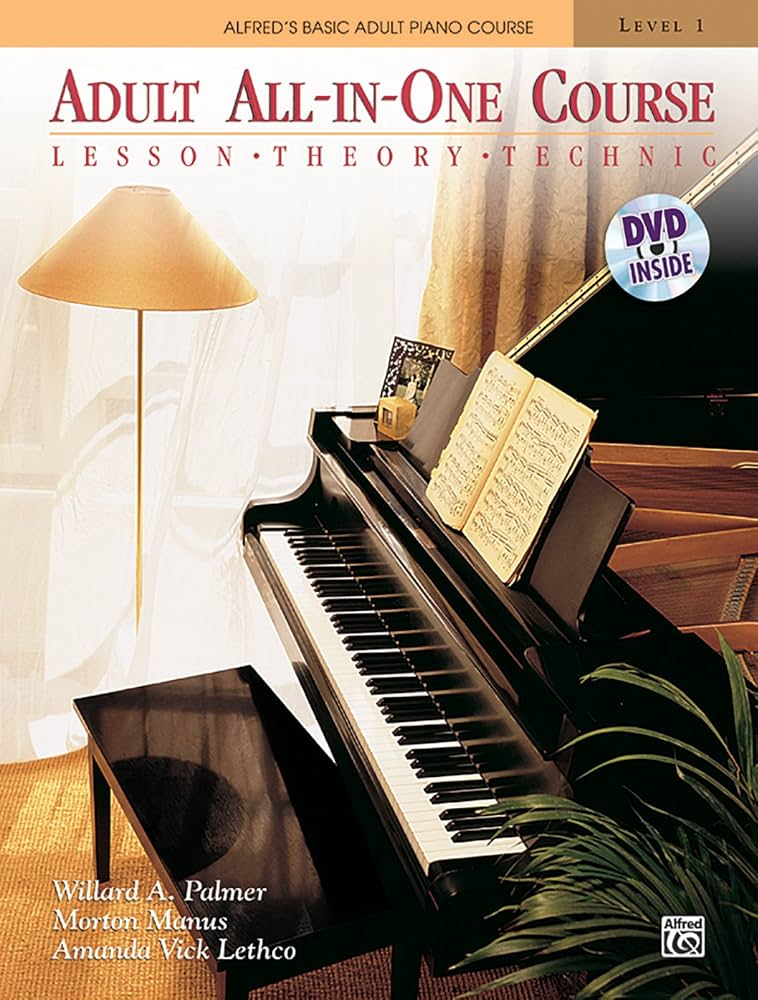
2. Alfred's Basic Adult All-in-One Course Book 1
Authors: Willard A. Palmer, Morton Manus, Amanda Vick Lethco
Publisher: Alfred Music
Price: $19.99 (book), $24.99 (with CD/DVD)
Format: Comb-bound, 143 pages
Multimedia: Optional CD with accompaniments, optional DVD with lessons
Overview
Alfred's is the theory-powerhouse of adult piano methods. If you want to understand music deeply—not just play notes—this book delivers. It's content-dense, covering an impressive amount of theory, technique, and chord progressions in 143 pages.
Best For: Detail-oriented learners who want comprehensive theory instruction. Musicians returning to piano after playing another instrument. Students working with teachers who can guide through the dense content.
What Makes It Stand Out
This book doesn't mess around. You'll learn hand anatomy, Hanon exercises, the Leschetizky Solution for finger strengthening, blues progressions, and extensive chord theory—topics most beginner books barely touch.
Alfred's shines in its chord theory coverage. You'll understand primary chords (I-IV-V), chord progressions, and even get introduced to jazz and blues concepts. For adults who want to play popular music by ear, this foundation is gold.
Pros:
- Most comprehensive theory coverage of any adult method
- Detailed technique instruction including Hanon exercises
- Excellent introduction to blues, jazz, and chord progressions
- Teaches both hands immediately
- Good progression through major and minor scales
- Introduces relative minor keys (D minor) unusual for Level 1
- Well-organized with clear learning objectives
Cons:
- Dense content can overwhelm beginners
- Faster pacing than Faber (not ideal for very slow learners)
- Many written theory exercises (tedious for some)
- Song repertoire is mediocre (functional but uninspiring)
- Best with a teacher to guide through complex concepts
- Some concepts introduced quickly without much reinforcement
Content Covered:
- Detailed hand technique and injury prevention
- Reading notation (both clefs introduced early)
- Hanon exercises and finger independence
- Complete major and minor pentascales
- Chord progressions and harmonization
- 12-bar blues form
- Relative minors
- Time signatures and complex rhythms
Pacing & Difficulty
Average completion time: 6-10 months with regular practice (45+ minutes daily recommended). Progresses to early intermediate level (Grade 2-3). The pace is brisk—you need strong practice habits to keep up.
Expert Take
Choose Alfred's if you're serious about understanding music theory and have time to practice thoroughly. It's less forgiving than Faber but teaches more. Best suited for former musicians, students with teachers, or highly motivated self-learners who don't mind working through challenging material.
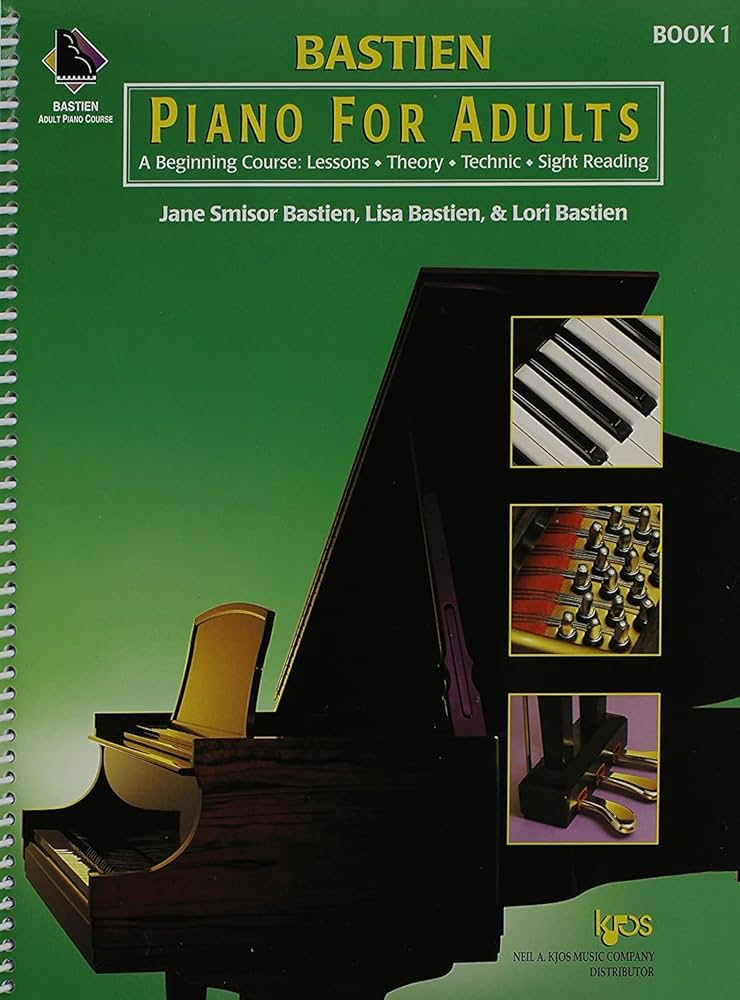
3. Bastien Piano for Adults Book 1
Authors: Jane Smisor Bastien, Lisa Bastien, Lori Bastien
Publisher: Neil A. Kjos Music Company
Price: $19.99
Format: Spiral-bound, 143 pages
Multimedia: Interactive Practice Studio app, optional CD
Overview
Bastien takes a "test yourself" approach to learning. This book is packed with reviews, quizzes, challenge pieces, and technical exercises. If you learn best through repetition and self-assessment, Bastien might be your perfect match.
Best For: Disciplined learners who enjoy structured challenges. Students who like checking their progress with quizzes and exercises. Those who want strong technical foundation from day one.
What Makes It Stand Out
The integrated review system is brilliant. Every few pages, you'll encounter a quiz, technique checkpoint, or challenge piece. This constant self-assessment helps you identify weak spots before they become bad habits. The bold text and clear layout make it easy to read on a music stand.
Bastien also includes some of the best-sounding arrangements in any beginner book. You'll play recognizable excerpts from Chopin's "Fantasie Impromptu," Mozart's Sonata in A Major, and a "Für Elise" arrangement that's remarkably close to Beethoven's original.
Pros:
- Best-sounding repertoire of any method reviewed here
- Integrated quizzes and reviews promote retention
- Strong emphasis on technical exercises
- Teaches both standard notation and chord symbols
- Clear, bold text perfect for music stands
- Progressive challenge pieces build confidence
- Interactive Practice Studio app is excellent
Cons:
- Some find the frequent quizzes tedious or test-anxiety inducing
- Limited blues, jazz, and pop until late in book
- Dense information in early chapters (front-loaded learning curve)
- Best with teacher to verify quiz answers
- Slightly more traditional/classical in approach
Content Covered:
- Reading through simplified contour notation first
- Landmark note memorization
- Major and minor pentascales
- Rhythm and time signatures
- Chord progressions (I-IV-V)
- Classical repertoire excerpts
- Technical exercises for each unit
Pacing & Difficulty
Average completion time: 8-12 months. Reaches Grade 2 level by end. The pacing is moderate but expect to spend time on review sections. Students who rush through without doing exercises miss the book's benefits.
Expert Take
Bastien is ideal if you're detail-oriented and don't mind written work. The quiz-based learning style isn't for everyone, but students who embrace it develop solid fundamentals. The beautiful song arrangements keep practice sessions rewarding.
4. Piano Adventures Accelerated Book 1
Authors: Nancy and Randall Faber
Publisher: Faber Piano Adventures
Price: $12.99
Format: Spiral-bound, 96 pages
Multimedia: Online resources, play-along tracks
Overview
Marketed for teens but perfect for many adults, Piano Adventures Accelerated offers a faster-paced alternative to the Adult Piano Adventures series. It covers similar ground in fewer lessons, making it ideal for quick learners.
Best For: Younger adults (20s-30s), former musicians, quick learners who find the adult series too slow, or anyone practicing 45+ minutes daily.
What Makes It Stand Out
Accelerated strips away some of the hand-holding found in the adult series while maintaining Faber's excellent teaching methodology. You'll progress through concepts more quickly but still get comprehensive coverage of technique, theory, and reading skills.
The book includes more varied musical styles than the adult version—you'll find pop, rock, classical, and film music alongside traditional pieces. For students who prefer contemporary sounds, this variety keeps practice fresh.
Pros:
- Faster progression than adult series (but still manageable)
- More contemporary and varied song selections
- Comprehensive when using full series (technique + theory books)
- No fixed hand positions—moves around keyboard from start
- Creative activities encourage improvisation
- Strong online resources and community
Cons:
- Design is slightly juvenile (though less so than children's books)
- May be too fast for complete beginners with limited practice time
- No rote pieces (focuses only on reading)
- Some adults prefer the maturity of adult-specific materials
Content Covered:
- Landmark note reading approach
- Interval recognition
- Multiple pentascales and positions
- Reading in various positions (not stuck at middle C)
- Chord progressions
- Lead sheet reading
- Creative composition exercises
Pacing & Difficulty
Average completion time: 6-9 months with regular practice. Faster than Faber Adult Adventures but more gradual than Alfred's. By completion, you'll reach Grade 2 level.
Expert Take
If you're under 40 and don't mind a slightly younger aesthetic, Accelerated offers excellent value. It's my recommendation for adults who find the regular adult series too slow or patronizing. Just be honest about your practice commitment, this book requires consistency.
5. John Thompson's Adult Piano Course Book 1
Author: John Thompson
Publisher: Willis Music
Price: $12.99
Format: Standard binding, 96 pages
Multimedia: None
Overview
A classic method that has taught generations, John Thompson's approach emphasizes musicality and artistry over technical drills. This book is for adults who love traditional classical music and appreciate elegant, time-tested teaching methods.
Best For: Classical music enthusiasts, students working with teachers, budget-conscious learners, those who prefer traditional pedagogy.
What Makes It Stand Out
Thompson's compositions are genuinely beautiful. Unlike many method books that sound like exercises, Thompson's pieces feel like real music from the first page. The book emphasizes phrasing, dynamics, and musical expression—treating music as art, not just notes on a page.
At just $12.99, it's the most affordable option on this list. For students on tight budgets or those unsure about committing to piano, Thompson offers a low-risk entry point.
Pros:
- Most beautiful compositions of any method book
- Affordable price point (nearly half the cost of competitors)
- Strong emphasis on musical expression and artistry
- Elegant, classic design and presentation
- Time-tested pedagogy (used successfully for decades)
- Develops good phrasing and dynamics from start
- Excellent for classical music lovers
Cons:
- Best used with teacher (includes teacher accompaniment parts)
- No multimedia resources at all
- Very limited chord theory coverage
- Faster concept introduction than modern methods
- Notation introduced immediately (steep learning curve)
- No contemporary or pop music
- Detailed teacher instructions may confuse self-taught learners
Content Covered:
- Grand staff reading from day one
- Note values and time signatures
- Musical phrasing and articulation
- Dynamics and expression markings
- Classical-style compositions
- Hand position and finger numbers
- Traditional theory concepts
Pacing & Difficulty
Average completion time: 6-10 months with teacher guidance. Concepts are introduced quickly, this isn't a hand-holding method. Self-taught learners may struggle. Reaches Grade 1-2 level.
Expert Take
Thompson is a beautiful budget option for students working with teachers or for second-time learners who remember basics from childhood. The gorgeous compositions make practice a joy. However, self-taught complete beginners should probably choose a more modern method with better explanatory resources.
6. Hal Leonard Student Piano Library: Adult Piano Method Book 1
Authors: Fred Kern, Phillip Keveren, Barbara Kreader, Mona Rejino
Publisher: Hal Leonard
Price: $19.99
Format: Standard binding, 96 pages
Multimedia: Online audio library with orchestral accompaniments
Overview
Hal Leonard takes a creative, exploratory approach to teaching piano. This book emphasizes keyboard geography and improvisation before diving deep into notation, making it perfect for hands-on learners who prefer playing to reading.
Best For: Creative learners who enjoy improvisation, students who want to explore before learning rules, those intimidated by traditional notation-heavy approaches.
What Makes It Stand Out
The first unit uses simplified contour notation, you'll play real music using keyboard diagrams and numbered fingers before tackling the staff. This builds confidence and keyboard familiarity early. The book consistently encourages experimentation and improvisation, rare in beginner methods.
The online orchestral accompaniments are phenomenal. Playing along with full band arrangements makes even simple pieces feel professional and exciting.
Pros:
- Innovative approach reduces notation intimidation
- Strong emphasis on improvisation and creativity
- Excellent orchestral accompaniment tracks online
- Focus on keyboard geography and physical comfort
- Teaches multiple styles (classical, jazz, folk, pop)
- Gradual, confidence-building progression
- Clear, concise explanations
Cons:
- Song selections somewhat bland
- Design and aesthetics less appealing than competitors
- Teacher accompaniment parts throughout
- Less comprehensive theory than Alfred's or Faber
- Simplified notation in Unit 1 may confuse some learners
Content Covered:
- Keyboard geography and spatial relationships
- Simplified contour notation transitioning to staff
- Black key improvisation
- Pentascales and hand positions
- Intervals and chords
- Various musical styles introduction
- Creative exploration exercises
Pacing & Difficulty
Average completion time: 8-12 months. Gentle, encouraging pace. Reaches Grade 1 level by completion.
Expert Take
Choose Hal Leonard if you're intimidated by notation or want a creative, exploratory approach. The improvisation focus is refreshing and develops skills often neglected in traditional methods. However, theory-minded students may find it too loose and prefer Alfred's or Faber's structure.
7. Piano Safari for the Older Beginner
Authors: Katherine Fisher and Dr. Julie Knerr
Publisher: Piano Safari
Price: $30.95 (book + sight reading cards)
Format: Spiral-bound, 144 pages
Multimedia: Sight reading cards, online resources
Overview
Piano Safari represents cutting-edge piano pedagogy, developed by two renowned experts. This method emphasizes rote pieces (learning by ear before seeing notation), strong technical foundation, and classical repertoire.
Best For: Classical music lovers, students with teachers (essential), serious learners willing to practice diligently, those wanting strong technical foundation from day one.
What Makes It Stand Out
The rote piece approach is unique—you'll learn pieces by ear and muscle memory before ever seeing them written. This develops aural skills and keyboard familiarity that pure reading-based methods miss. The technical foundation is also superior to most methods.
The sight reading card system is brilliant, giving you separate materials to develop reading skills independently from repertoire learning.
Pros:
- Cutting-edge pedagogy from top experts
- Rote pieces develop ear training and keyboard confidence
- Superior technical instruction
- Focus on classical music with excellent repertoire
- No fixed hand positions—full keyboard exploration
- Clean, sophisticated design
- Strong emphasis on sound quality and touch
- Sight reading cards develop reading separately
Cons:
- Requires teacher (not ideal for self-teaching)
- Heavy reliance on teacher accompaniments
- Lots of hands-separate exercises in early lessons
- Book 2 and 3 may progress too quickly
- Theory moves fast and can feel dry
- Rote pieces frustrate analytical learners who want to read everything
- More expensive than competitors
Content Covered:
- Rote repertoire with teacher modeling
- Landmark note reading approach
- Strong technical exercises
- Classical pieces and etudes
- Keyboard geography exploration
- Interval reading
- Music theory fundamentals
Pacing & Difficulty
Average completion time: 8-14 months with teacher. Book 1 pacing is excellent, but Books 2-3 accelerate significantly. Reaches Grade 2 level.
Expert Take
Piano Safari is exceptional if you have a teacher and love classical music. The pedagogy is sophisticated and produces excellent results. However, it's challenging for self-taught learners and may feel too serious or demanding for casual hobbyists. Best for dedicated students.
8. The Classical Piano Method: Method Book 1
Author: Hans-Günter Heumann
Publisher: Schott Music
Price: $19.99
Format: Hardcover, 96 pages
Multimedia: Included CD with recordings
Overview
This European method combines piano instruction with music history education. Every piece includes context about the composer and era, making it perfect for adults who want to understand the classical tradition deeply.
Best For: Classical music enthusiasts, history lovers, students wanting cultural context, those who enjoy detailed technical instruction.
What Makes It Stand Out
The historical context enriches every lesson. You're not just learning to play Rameau's Minuet—you're learning about Baroque style, Rameau's life, and historical performance practice. For intellectually curious adults, this depth transforms practice into cultural education.
The included CD features professional recordings, crucial since there are no online resources. You'll hear exactly how pieces should sound.
Pros:
- Rich historical and cultural context
- Sophisticated, grown-up design and hardcover quality
- Detailed technique and theory instruction
- Challenging "Theory Check" quizzes
- Both British and American terminology explained
- Excellent focus on classical repertoire
- Periodic review sections
- Glossary and theory reference guide
Cons:
- Exclusively classical music (no jazz, pop, blues)
- Minimal chord theory or improvisation
- Progresses quite quickly
- Final pieces are genuinely challenging
- Somewhat obscure composer/piece selections
- Limited multimedia (just CD, no videos)
- Better with teacher guidance
Content Covered:
- Simplified notation transitioning to staff
- Detailed technique instruction
- Music history and composer biographies
- Reading in treble and bass clef
- Classical forms and structures
- Time signatures and rhythm
- Theory fundamentals with quizzes
Pacing & Difficulty
Average completion time: 6-10 months. Fast progression—final pieces approach Grade 2-3 level. Requires dedicated practice.
Expert Take
Choose this method if you're fascinated by classical music and history. The cultural enrichment makes every practice session educational. However, students wanting contemporary styles or casual learning should choose a more versatile method.
9. Piano Book for Adult Beginners (Damon Ferrante)
Author: Damon Ferrante
Publisher: Steeplechase Arts
Price: $23.65
Format: Paperback, 121 pages
Multimedia: Video lessons on YouTube, audio files online
Overview
This self-published bestseller became popular through grassroots support and excellent multimedia resources. Ferrante provides free YouTube video lessons for every page, making it incredibly accessible for self-taught learners on a budget.
Best For: Self-taught beginners, budget-conscious students, visual learners who benefit from video instruction, those wanting extensive multimedia support.
What Makes It Stand Out
The free video component is game-changing. Every single lesson has a corresponding YouTube video where Ferrante demonstrates the exercises, explains concepts, and plays the pieces. For self-taught learners, it's like having a patient teacher available 24/7.
The book also includes music theory, technique exercises, and a mix of classical and popular melodies, making it surprisingly comprehensive for the price.
Pros:
- Extremely affordable ($23.65)
- Comprehensive video lessons on YouTube (free)
- Designed specifically for self-teaching
- Includes technique exercises and theory
- Mix of classical and contemporary pieces
- Large, clear notation and text
- Strong Amazon reviews from real users
- Good balance of hands-together and separate practice
Cons:
- Self-published quality (occasional typos/inconsistencies)
- Less polished than major publisher methods
- Progression can feel uneven
- Limited supplemental materials
- Song arrangements are simplified (less sophisticated)
- No spiral binding (book doesn't stay open)
Content Covered:
- Basic technique and hand position
- Note reading in both clefs
- Time signatures and rhythm
- Major scales and fingering patterns
- Chords and chord progressions
- Classical pieces (simplified)
- Popular song arrangements
Pacing & Difficulty
Average completion time: 8-12 months. Moderate pacing. Reaches Grade 1-2 level.
Expert Take
Ferrante's book offers incredible value for self-taught beginners on tight budgets. The video instruction compensates for publishing limitations. While it's not as refined as Faber or Alfred's, it works well for students who prioritize accessibility and cost-effectiveness over production polish.
10. Pam Wedgwood: It's Never Too Late to Play Piano
Author: Pam Wedgwood
Publisher: Faber Music
Price: $13.99
Format: Paperback, 96 pages
Multimedia: Included CD with play-along tracks
Overview
This British method book has a devoted following in the UK and Europe. Wedgwood is known for composing engaging, fun pieces that don't sound like exercises—her original compositions are genuinely enjoyable to play.
Best For: UK students (easier to obtain), those wanting inspiring repertoire, students with teachers, fast learners who can handle quicker progression.
What Makes It Stand Out
Wedgwood's original compositions are the highlight. Unlike generic method book pieces, her music has character, personality, and satisfying harmonies. Many students report looking forward to practice because the music itself is rewarding.
The 15-unit structure provides clear organization with tips and facts throughout each section. The included CD features both performance recordings and play-along tracks.
Pros:
- Excellent, inspiring original compositions
- Clear 15-unit organization
- Helpful tips and musical facts throughout
- Mix of recognizable pieces and originals
- Play-along CD included
- Strong focus on technique
- Reaches impressive level by final pieces
- Concert-ready pieces at book's end
Cons:
- Faster pace than American methods (best with teacher)
- Less theory coverage than Faber Adult Adventures
- More expensive in US (import pricing)
- Harder to find in US music stores
- May progress too quickly for slower learners
- Limited multimedia beyond CD
Content Covered:
- Hand position and technique
- Reading in both clefs
- Varied rhythms and time signatures
- Dynamic expression
- Original contemporary compositions
- Recognizable classical themes
- Performance-ready repertoire
Pacing & Difficulty
Average completion time: 1.5-2 years with teacher guidance. Faster pace than Faber but manageable with instruction. Reaches Grade 2 level.
Expert Take
Wedgwood's book shines in repertoire quality—the pieces are genuinely fun to practice. However, the faster pace makes teacher guidance advisable. UK students should definitely consider this method; US students may prefer more readily available American methods unless they specifically want Wedgwood's compositional style.
11-15. Additional Worthy Mentions
- Bastien's Older Beginner Piano Course Level 1 ($30.99)
True self-instruction format with exceptional clarity. More methodical than Bastien Piano for Adults. Good for very cautious learners who want extremely gradual progression. - Alfred's Basic Adult Piano Course: Greatest Hits Book 1 ($18.95)
Popular songs supplement designed to work with Alfred's main course. Features recognizable melodies from various eras. Best used alongside a method book rather than standalone. - Keith Snell Piano Course for the Adult Beginner ($23.29)
10-unit structure with free online resources. Middle ground between traditional and modern methods. Less commonly used but solid pedagogy. - Easy Classical Piano Music for Beginners ($14.99)
Budget supplement featuring simplified classical pieces. Not a method book but excellent for additional repertoire alongside your main course. - Mikrokosmos Book 1 (Béla Bartók) ($10.99)
Advanced pedagogy focusing on sight-reading and modal compositions. Challenging but brilliant for developing reading skills. Best with teacher guidance; not for complete beginners without instruction.
Supplemental Materials You'll Need
No piano book exists in isolation. Here are the additional tools that will enhance your learning experience.
Essential Additions
Metronome ($15-50)
Non-negotiable for developing steady rhythm. Digital metronomes offer multiple sounds and visual displays; traditional mechanical metronomes have satisfying physical presence. Free metronome apps work but lack the physical reinforcement of a dedicated device.
Music Stand ($25-60)
Protects your book and positions it at proper eye level. Adjustable stands accommodate different seating heights. Your back and neck will thank you for not hunching over books on your piano's music rack.
Pencil for Marking Music ($5)
Mark fingerings, circle tricky spots, write reminders. Always use pencil (never pen) so you can erase as you progress. Pro tip: Keep a dedicated music pencil that won't disappear into your household pencil stash.
Practice Journal ($12-20)
Track what you practice and how long. Identifying patterns helps you understand what practice methods work. Even a basic notebook works—just log dates, pieces practiced, and brief notes.
Helpful Supplements
Theory Workbooks ($8-15 each)
- Excellence in Theory series (progressive levels)
- Fundamentals of Piano Theory (detailed explanations)
- I Can Read Music Note Speller books (focused note reading)
Scale/Chord Reference Books ($10-20)
Visual guides showing every scale and chord. Pianote's Chords and Scales Book ($19.99) is particularly well-designed with spiral binding and clear diagrams.
Sight-Reading Practice Books ($10-15)
Dedicated sight-reading materials help you learn to read fluently. Look for books matching your current level—don't jump ahead.
Popular Song Collections ($15-25)
Once you've completed 3-4 units of your method book, supplement with popular songs. Look for "easy piano" or "simplified" arrangements matching your level.
Digital Tools
Practice Apps (Free-$25/month)
- Simply Piano: Gamified learning with instant feedback
- Flowkey: Song library with accompaniment tracks
- Playground Sessions: Video instruction and practice tools
Online Piano Courses ($20-40/month)
- Pianoforall: Structured curriculum.
- Pianote: Comprehensive lessons with real teachers
- ArtistWorks: Video exchange lessons with professional pianists
YouTube Channels (Free)
- Bill Hilton: Excellent chord theory and pop piano
- Let's Play Piano Methods: Method book walkthroughs
- Josh Wright Piano TV: Classical technique and interpretation
Piano Method Books by Learning Goal
Best for Complete Beginners
Top Pick: Faber Adult Piano Adventures
Gradual progression, excellent multimedia, perfect for self-teaching.
Runner-Up: Hal Leonard Adult Method
Creative approach reduces notation intimidation.
Why: Both offer gentle introductions without patronizing adults. Clear explanations and confidence-building pacing prevent overwhelm.
Best for Classical Music Lovers
Top Pick: Piano Safari for the Older Beginner
Superior pedagogy, classical repertoire focus, strong technical foundation.
Runner-Up: The Classical Piano Method
Historical context enriches every lesson.
Why: These methods treat classical music seriously, developing proper technique and interpretive skills from day one.
Best for Pop/Contemporary Focus
Top Pick: Alfred's Basic Adult All-in-One
Strong chord theory enables playing by ear and understanding pop progressions.
Runner-Up: Faber Adult Piano Adventures
Includes lead sheet reading essential for contemporary music.
Why: Understanding chords and progressions is fundamental to playing popular music. These books provide that foundation.
Best for Self-Taught Learners
Top Pick: Faber Adult Piano Adventures
Best multimedia resources, clearest explanations, most supportive for solo learning.
Runner-Up: Damon Ferrante's Piano Book
Free video lessons for every page.
Why: Self-teaching requires exceptional instructional clarity and demonstration resources. These deliver both.
Best for Quick Progress
Top Pick: Alfred's Basic Adult All-in-One
Fast pace covers substantial ground quickly.
Runner-Up: Piano Adventures Accelerated
Efficient progression without sacrificing comprehension.
Why: For motivated students with ample practice time, these methods progress efficiently while maintaining quality instruction.
Best Budget-Friendly Options
Top Pick: John Thompson's Adult Piano Course ($10.99)
Half the price of competitors with time-tested pedagogy.
Runner-Up: Damon Ferrante's Piano Book ($14.99)
Includes free YouTube video lessons.
Why: Quality instruction doesn't require premium pricing. These affordable options deliver solid results.
Common Mistakes When Choosing Piano Books
1. Picking Books Designed for Children
It's tempting to grab your child's old piano book or choose a method because it's "for beginners." But children's books progress glacially. What takes kids 2-3 years, adults can learn in 8-12 months.
What to choose instead: Books explicitly marketed as "adult" methods that respect your analytical abilities and provide age-appropriate content.
2. Starting with Advanced Material
"I'm an adult, I should skip the beginner stuff and start at intermediate level." This never works. Piano requires fundamental technical habits that can't be shortcut.
What to do instead: Start at the actual beginning. You'll progress through beginner material faster than children, but you can't skip it entirely. Strong foundations prevent bad habits.
3. Buying Too Many Books at Once
You see Faber, Alfred, Bastien, why not get them all? But multiple methods create confusion. Each approaches concepts differently, and jumping between them muddles your understanding.
When to add supplemental materials: After completing 4-5 units of your primary method, add one supplemental book (like a popular songs collection). Don't add a second method book.
4. Ignoring Your Musical Preferences
If you hate classical music, don't buy a classical-focused method. If you dream of playing jazz, don't choose a book without chord theory. Your musical goals should guide your book selection.
Match books to goals: Love classical? Choose Piano Safari or Classical Piano Method. Want to play at parties? Choose books with strong chord theory like Alfred's.
5. Skipping Multimedia Resources
"I'll just buy the book, I don't need the CD/DVD." But hearing pieces played correctly is crucial for learning proper interpretation, timing, and expression. Videos demonstrate techniques words can't convey.
What to prioritize: Books with online video resources (like Faber's QR codes or Ferrante's YouTube lessons) provide the most value for self-taught learners.
How to Get the Most from Your Piano Book
Creating an Effective Practice Routine
Recommended Daily Practice Time:
- Minimum: 20 minutes (slow but steady progress)
- Ideal: 30-45 minutes (consistent improvement)
- Advanced commitment: 60+ minutes (rapid advancement)
Practice Structure for 30-Minute Session:
- 5 minutes: Warm-up with scales or previous pieces
- 10 minutes: New material (exercises, reading practice)
- 10 minutes: Current pieces (repetition, refinement)
- 5 minutes: Fun playing (pieces you've mastered, improvisation)
Progress Tracking:
Mark your calendar with daily practice. Seeing a streak of consecutive days motivates continued commitment. Note pieces mastered and concepts understood—visible progress combats discouragement.
Working with vs. Without a Teacher
Benefits of Self-Teaching:
- Learn at your own pace
- Practice on your schedule
- Lower cost
- Freedom to explore interests
Benefits of Teacher Guidance:
- Immediate feedback on technique
- Prevents bad habits
- Personalized instruction
- Accountability and motivation
- Explanation of confusing concepts
Hybrid Approach (Recommended):
Use your method book for daily practice but take monthly lessons for technique checks and guidance. This balances affordability with professional input when you need it most.
Knowing When to Progress
Completion Criteria for Moving to Book 2:
✓ You can play all pieces at the marked tempo with no errors
✓ You understand all theory concepts introduced
✓ Hand positions feel natural and comfortable
✓ You can sight-read new pieces at 50% of performance tempo
✓ You've completed all exercises and theory pages
Don't Rush: Better to solidify Book 1 thoroughly than struggle through Book 2 with shaky foundations. If pieces feel hard, you're not ready yet—and that's okay.
Average Timeline:
- With teacher: 8-12 months for Book 1
- Self-taught: 10-14 months for Book 1
- Faster with prior music experience: 6-8 months
Frequently Asked Questions
What is the best piano book for adult beginners?
Faber Adult Piano Adventures All-in-One Course Book 1 is the best overall choice for most adult beginners. It offers the ideal balance of comprehensive instruction, multimedia resources, and gradual pacing that builds confidence without boredom.
For specific situations:
- Self-taught learners: Faber or Damon Ferrante's book (best multimedia)
- With a teacher: Alfred's All-in-One or Bastien (faster, denser instruction)
- Classical focus: Piano Safari or Classical Piano Method
- Budget-conscious: John Thompson's ($10.99)
Can I really teach myself piano from a book?
Yes, many adults successfully teach themselves piano using method books, especially those with strong multimedia resources. However, success requires:
- Self-discipline: Consistent practice without external accountability
- Patience: Progress may be slower than with a teacher
- Good habits: Video resources help, but you can't get real-time technique feedback
- Problem-solving: You'll need to figure out confusing concepts independently
Best approach: Use books as your foundation but consider occasional lessons (monthly or quarterly) with a teacher for technique checks and guidance on confusing concepts. This hybrid approach gives you independence while preventing bad habits.
How long does it take to complete Book 1?
Average timeline:
- With daily practice (30-45 min): 8-12 months
- Inconsistent practice: 12-18 months
- With teacher guidance: Typically on the faster end
- Self-taught: Usually on the slower end
Factors affecting speed:
- Prior musical experience (any instrument)
- Natural coordination and rhythm sense
- Practice consistency and quality
- Book complexity (Alfred's faster than Faber)
- Age (younger adults may progress slightly faster)
Don't race: Better to take 12-14 months and truly master the material than rush through in 6 months with shaky fundamentals.
Do I need a real piano or will a keyboard work?
A keyboard is perfectly fine for beginners—in fact, it's often more practical. However, ensure your keyboard has:
Essential features:
- 88 weighted keys: Full-size keyboard with realistic key resistance
- Touch sensitivity: Keys respond to how hard you press
- Sustain pedal input: You'll need pedal for intermediate pieces
Nice to have:
- Good speaker system: Or use headphones for better sound
- MIDI connectivity: Enables use with learning apps
Avoid: Cheap portable keyboards with only 61 keys and unweighted keys. These don't develop proper finger strength or technique.
When to upgrade to acoustic piano: If you're still playing after 1-2 years and budget allows, acoustic pianos offer superior touch and tone. But modern digital pianos ($500-1,500) are excellent for beginners through intermediate levels.
What's the difference between adult and children's piano books?
Pacing:
- Children's books: Progress very slowly (concepts spread over 2-3 years)
- Adult books: Condense same material into 6-12 months
- Why: Adult brains grasp abstract concepts faster; kids need more repetition
Content:
- Children's books: Cartoon characters, simple songs, games
- Adult books: Sophisticated design, varied repertoire, mature themes
- Why: Age-appropriate engagement differs significantly
Teaching approach:
- Children's books: Heavy use of rote learning, visual aids, play-based learning
- Adult books: Detailed explanations of "why," analytical approach, less hand-holding
- Why: Adults want to understand; kids need concrete experiences
Can adults use kids' books? Technically yes, but you'll be bored and progress unnecessarily slowly. Spend the same $20 on an adult method for better results.
Should I buy physical books or digital versions?
Physical books advantages:
- Easier to flip pages while playing
- No screen glare or battery concerns
- Can mark with pencil
- More durable
- Better for extended use
Digital versions advantages:
- Searchable content
- Portable (entire library on tablet)
- Sometimes includes enhanced multimedia
- Interactive features (in some apps)
- No shipping costs
Recommendation: Buy physical for your main method book (you'll reference it constantly), digital for supplemental materials you use occasionally. Spiral binding is worth the investment, books stay open on music stands.
How much should I spend on piano books?
Essential initial investment:
- Method book: $15-25
- Metronome: $15-30
- Music stand: $25-40
- Total: $55-95
Optional first-year additions:
- Supplemental songbook: $15-25
- Theory workbook: $10-15
- Practice journal: $10-20
- Total with optionals: $90-155
Cost perspective: One year of weekly piano lessons costs $1,500-3,000. Books + self-teaching costs under $200. Even adding occasional teacher consultations ($200-400/year), you save substantially.
Budget alternative: Borrow method books from library to try before buying. Many libraries carry popular methods like Faber and Alfred.
Can I skip the theory parts and just play songs?
Short answer: You can, but you shouldn't.
Why theory matters:
- Understanding aids memory: Knowing why notes work together helps you remember pieces
- Faster progress long-term: Theory shortcuts later learning
- Playing by ear: Requires understanding chords and progressions
- Improvisation: Impossible without theory foundation
- Fixing mistakes: Understanding helps you identify and correct errors
Minimum theory needed:
- Note names and values
- Time signatures
- Key signatures
- Basic chords (major, minor, seventh)
- Simple scales
Compromise: If written theory exercises bore you, skip those—but read the theory explanations and apply them to pieces you're playing. Understanding theory in practice is more valuable than filling worksheets.
What if I'm over 60, am I too old?
Absolutely not. Research shows adults in their 60s, 70s, and even 80s successfully learn piano. In fact, learning piano provides cognitive benefits particularly valuable as we age:
Brain benefits:
- Improved memory and cognitive function
- Enhanced coordination
- Stress reduction
- Social connections (playing for others)
- Sense of accomplishment
Age-specific considerations:
- Pace yourself: You may need slightly longer to develop muscle memory
- Choose comfortable keys: Avoid stretchy pieces if arthritis is a concern
- Prioritize enjoyment: Play music you love
- Practice quality over quantity: Three focused 20-minute sessions beat one rushed hour
Success stories: Many of my most dedicated students started piano after retirement. Free from work pressure, they practice consistently and progress wonderfully. Age brings patience—a significant advantage in piano learning.
Do these books work with digital pianos?
Yes, completely. Modern method books work perfectly with digital pianos. In fact, digital pianos offer some advantages for book-based learning:
Digital piano benefits:
- Headphone practice: Learn without disturbing others
- Built-in metronome: Many digital pianos include one
- Volume control: Adjust for comfortable practice
- Recording features: Record yourself to assess progress
- Connectivity: Some books' online resources connect via MIDI
Ensure your digital piano has:
- 88 weighted keys (full keyboard)
- Touch-sensitive keys (velocity sensitivity)
- Pedal input for sustain pedal
Limitation: Very cheap keyboards (<$200) with unweighted keys and limited octaves won't develop proper technique. Invest in a quality digital piano ($400-1,000) for best results.
Start Your Piano Journey Today
You've explored 15 method books, learned how to choose the right fit, and discovered what makes adult piano learning successful. Now it's time to take action.
My top recommendations:
- Best overall: Faber Adult Piano Adventures (comprehensive, excellent for self-teaching)
- Best with teacher: Alfred's Basic Adult All-in-One (thorough theory, efficient progression)
- Best for classical: Piano Safari for Older Beginner (superior pedagogy, beautiful repertoire)
- Best budget option: John Thompson's Adult Piano Course (affordable quality)
Your next steps:
- Choose one book from this guide that matches your goals and learning style
- Order it today—don't wait for the "perfect" time (it doesn't exist)
- Set up your practice space with proper lighting, seating, and music stand
- Commit to 30 days of daily practice (even just 15 minutes)
- Track your progress to stay motivated through early challenges
Remember: Every pianist you admire started exactly where you are now: at page one, pressing keys for the first time. The difference between them and someone who never learned? They started and kept going.
Piano learning as an adult is a gift you give yourself. Unlike childhood lessons (often driven by parental pressure), you're choosing this for pure joy. Honor that choice with consistent practice and patience.
You're never too old, never too late, never too anything to learn piano. The best time to start was years ago. The second-best time is today.
Comments ()