
Skoove Review 2026: Honest Verdict After Testing the App
It gets a beginner from nothing to playing a real song. It also cannot hear how long you held a note, or what your hands are doing. The honest limits, and the 2026 prices.
On this page
Skoove is a piano learning app that listens while you play and tells you whether you hit the right notes. It costs €12.49 a month on the annual plan (€149.99 up front), it has a free tier that never expires, and it is one of the better ways for an adult beginner to get from nothing to playing recognizable songs.
It also stops earlier than its marketing suggests. The feedback engine checks pitch and timing, and it does that well. It cannot hear how long you hold a note, how tense your hand is, or whether your fingering will still work three bars later. That gap sets the ceiling on what Skoove can teach you, and it arrives around the point most people call intermediate.
Buy it if you're starting from zero and want structure. Skip it if you already play and want to get better at playing rather than at learning songs.
Skoove review scores
Last checked September 2026The strongest thing it does. Zero to a recognizable song without a teacher.
Near-perfect on pitch and timing, blind to duration, tone and hand shape.
Plateaus in early intermediate. The Advanced courses are not advanced.
The free tier and the annual price are fair. You are renting, not owning.
Scored as a self-guided learning app for adult beginners, which is the job it is built for.
What Skoove costs in 2026
| Plan | Price | Notes |
|---|---|---|
| Free (Skoove Basic) | €0 | Selected lessons from each course, no card required, no time limit |
| 1 month | €29.99/month | Billed monthly |
| 3 months | €19.99/month | €59.99 charged quarterly |
| 12 months | €12.49/month | €149.99 charged up front, includes a 7-day free trial |
| Lifetime | Not published | One-time payment, arranged by emailing Skoove support |
Prices shown are from Skoove's own pricing page and appear in your local currency; US readers see the same numbers in dollars, so the annual plan lands at about $149.99.
Two things worth knowing before you enter a card. The 7-day trial converts to a paid year unless you cancel inside the week. And Skoove's published terms say cancelling stops future renewals but gives no partial refund for time you haven't used, so the free tier is a safer way to look around than the trial is.
How Skoove works
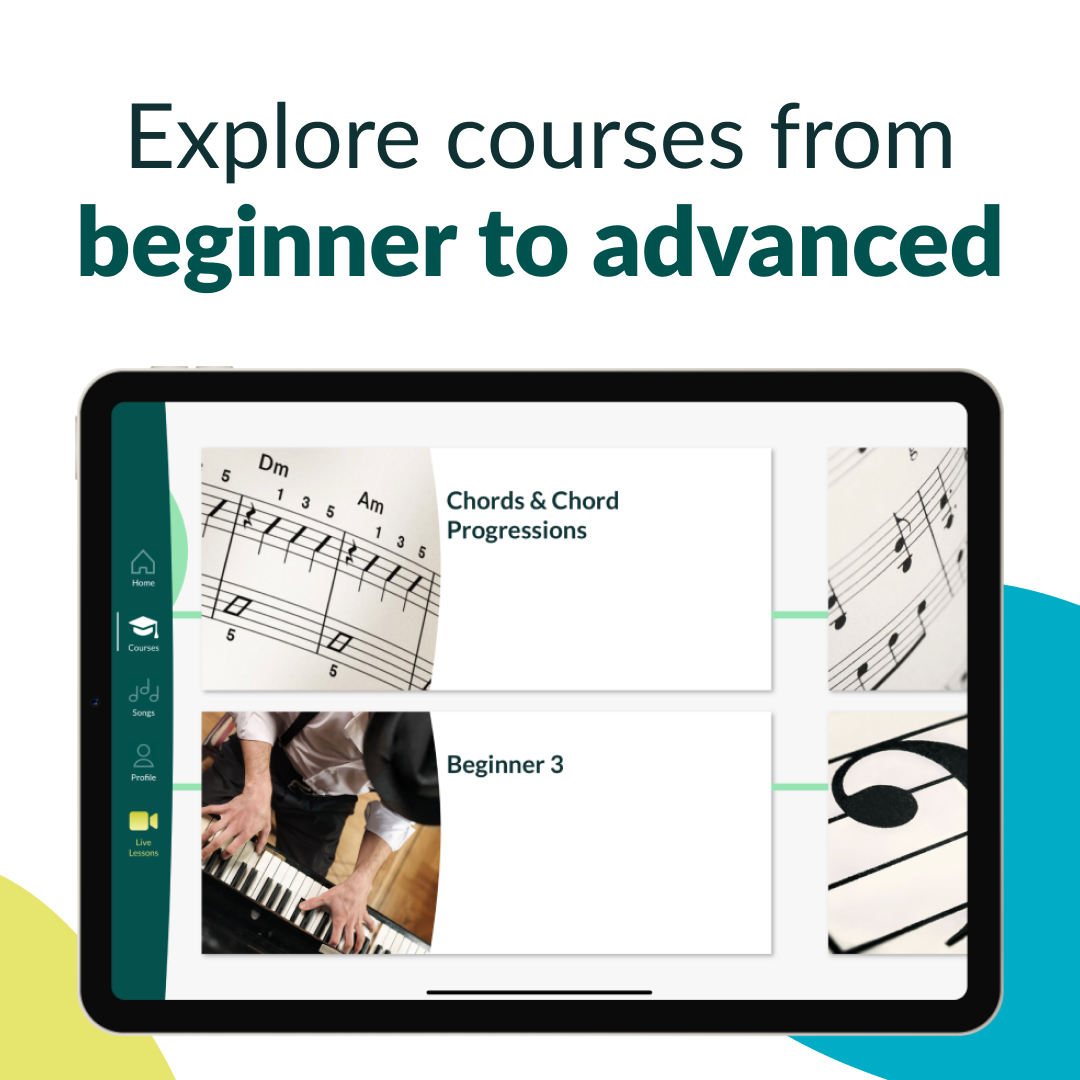
Every lesson runs the same three steps. You listen to the passage, you learn it in slow segments with the notes lighting up on an on-screen keyboard and on the sheet music, then you play it while the app follows along.
The app tracks what you play through one of three inputs:
- USB MIDI, using a USB-to-Host cable from a digital piano
- Bluetooth MIDI, for keyboards that support it
- Your device's microphone, which works with any instrument including an acoustic piano
The microphone option is why Skoove works for people with an upright in the hall and no digital keyboard, and it's a real advantage over apps that need MIDI. It's also the weaker input. Skoove's own help pages recommend a quiet room and note that background noise confuses the note detection, so if you own a digital piano, connect it by cable and stop thinking about it.
Skoove advertises over 1,000 lessons and songs across pop, rock, jazz, blues, and classical, and says it has more than 3 million learners. Premium includes one-to-one messaging with its music instructors, which is a better feature than it sounds: it means a human answers when you get stuck on something the app can't explain.
What the feedback can hear, and what it can't
This is the part of Skoove that decides whether it suits you, and most reviews skip it.
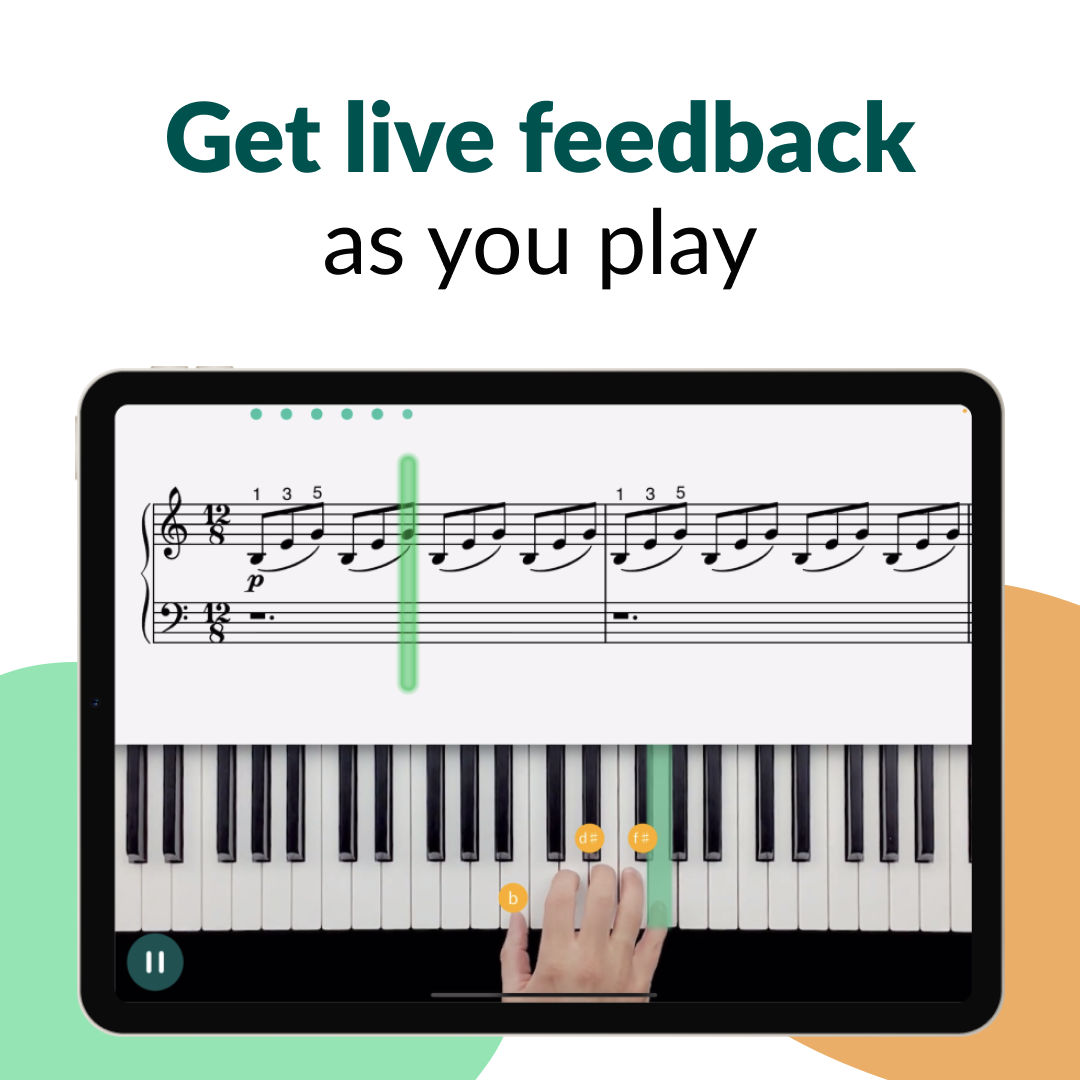
The note detection does its job well. Play the right notes at the right moment and Skoove knows. One independent reviewer who tested it at length called the detection "virtually perfect" for beginner material, and that matches what the app is built to do.
Skoove grades pitch and timing, and stops there. It does not grade duration, so a passage of half notes played as short stabs still scores full marks as long as each note starts in the right place. It cannot hear phrasing, dynamics beyond the crudest level, pedalling, or tone. It has no idea what your hands are doing, so collapsed wrists, flat fingers, and a thumb tucked under at the wrong moment all pass unnoticed.
| Skoove checks | Skoove cannot check |
|---|---|
| Whether you played the right note | How long you held it |
| Whether you played it on the beat | Whether the phrase breathes |
| Whether you kept up with the track | Your hand shape, wrist height, or fingering |
| Whether you finished the lesson | Your pedalling and tone |
For a beginner, none of this matters much. Right notes, right time is the whole job in month one, and getting instant confirmation is worth more than any other feature in the app.
For anyone past that, the missing half is the half that separates playing notes from playing music. That is the honest case for adding a teacher later, or at least filming your hands, rather than the case against Skoove.
Where the curriculum stops
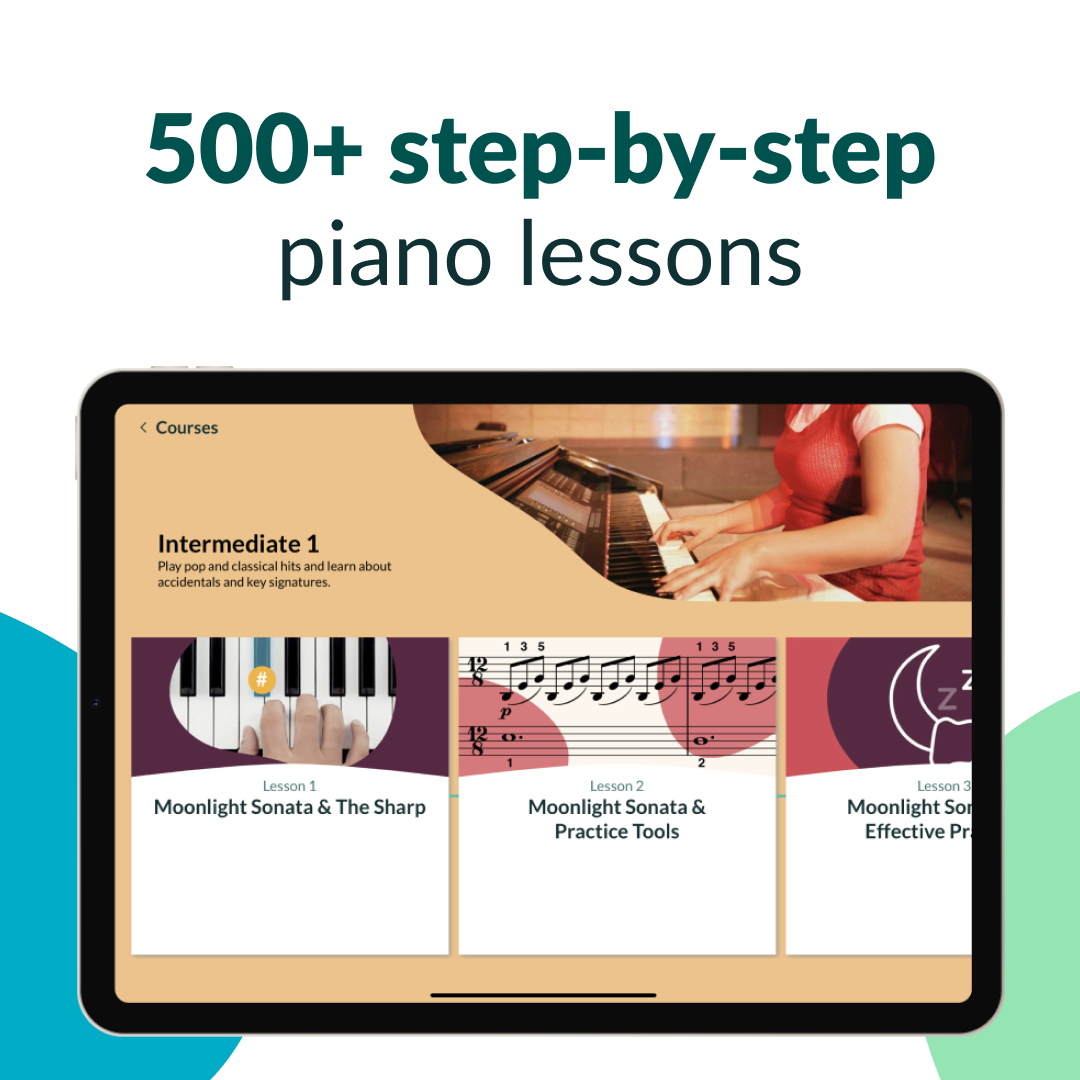
Skoove's courses run from Kids and Beginner through to Advanced. The labels overstate the top end.
Independent testing found that many lessons filed under Advanced sit closer to intermediate, and that the progression thins out once you're past early intermediate material. Reviewers who went looking for a technical framework, meaning hand independence, chord inversions, and fingering through awkward passages, found it missing. You can finish a lot of Skoove and know the notes to many songs without having built the mechanics underneath them.
Music theory gets similar treatment. It's woven into the song lessons rather than taught as a subject, which keeps beginners moving but leaves gaps. If you want to understand why a progression works, read a lead sheet, or improvise, Skoove is not the tool.
None of this makes it a bad app. It makes it a beginner's app with an intermediate ceiling, priced and marketed as though the ceiling weren't there.
Who Skoove is for
Good fit:
- Adult beginners who want structure and can't face a metronome and a method book
- Anyone with an acoustic piano and no MIDI keyboard, since microphone input works
- Learners who need a reason to sit down, and who respond to songs they recognize
- Parents looking for an ad-free app a child can use without supervision
Poor fit:
- Intermediate players who already read music and want technique
- Anyone whose goal is improvisation, theory, or playing by ear
- Learners chasing exam grades or classical repertoire at any depth
- Anyone who wants to own their materials rather than rent access
How Skoove compares
| Platform | Feedback | Strongest at | Payment |
|---|---|---|---|
| Skoove | MIDI or microphone, pitch and timing | Getting a complete beginner reading and playing | Subscription |
| Flowkey | MIDI or microphone | A larger song library, similar ceiling | Subscription |
| Simply Piano | MIDI or microphone, gamified | Keeping children and streak-driven adults at it | Subscription |
| Playground Sessions | MIDI, more detailed scoring | Deeper progression for intermediates | Subscription |
| Pianoforall | None, it's a course not an app | Chords, styles, and playing by ear | One-time |
We've tested these against each other in our guide to the best online piano lessons, which is the place to start if you haven't settled on a platform.
The case for Pianoforall instead
Pianoforall solves a different problem, and for some readers it's the better purchase.
It's a course rather than an app: around 25 hours of video embedded in ten e-books, bought once with no subscription. It teaches chord patterns and rhythm styles first, so you're playing something that sounds like music within weeks, and it spends real time on playing by ear and improvising. Those are the two things Skoove leaves out.
You give up the feedback loop. Nothing listens to you, nothing tells you that bar 12 was wrong, and nobody chases you when you skip a week. That suits a self-directed learner and frustrates everyone else.
The honest split: pick Skoove if you need the app to keep you honest, and Pianoforall if you'd rather own the material and work at your own pace.
Frequently asked questions
How much does Skoove cost?
Skoove Premium costs €29.99 a month billed monthly, €19.99 a month billed quarterly (€59.99 every three months), or €12.49 a month billed yearly (€149.99 charged up front). US pricing mirrors these figures in dollars. A free tier with selected lessons is available with no card and no time limit.
Is Skoove free?
There's a free tier called Skoove Basic, with no time limit, that gives you selected lessons from each course with no credit card required. Premium adds the full library, and its 7-day trial does ask for payment details and converts to a paid plan unless you cancel first.
Does Skoove work with a MIDI keyboard?
Yes. Skoove connects over USB MIDI using a USB-to-Host cable, over Bluetooth MIDI on keyboards that support it, or through your device's microphone. If you have a digital piano, use a cable, because microphone detection struggles with background noise.
Does Skoove work with an acoustic piano?
Yes, through your device's microphone. This is one of Skoove's genuine advantages over apps that require a MIDI connection. Play in a quiet room, since noise interferes with note detection.
Can Skoove replace a piano teacher?
No. Skoove checks whether you played the right notes at the right time. It cannot see your hands, so it misses tension, hand shape, and fingering, and it doesn't grade note length, phrasing, or pedalling. It works well alongside occasional lessons rather than instead of them.
Is Skoove good for advanced players?
No. Independent testing found that much of Skoove's Advanced material sits closer to intermediate and that the progression thins out past early intermediate. Advanced players will exhaust it in weeks.
How many lessons does Skoove have?
Skoove advertises over 1,000 lessons and songs across pop, rock, jazz, blues, and classical, organised into courses from Kids and Beginner through Advanced, and the library keeps growing.
Does Skoove teach music theory?
Lightly. Theory is folded into song lessons rather than taught as a subject, which suits beginners but leaves gaps. Skoove won't teach you to read a lead sheet, understand harmony, or improvise.
Can I get a refund from Skoove?
Skoove's published terms say you can cancel at any time, that access continues to the end of the billing period, and that no partial refunds are given for unused time. Use the free tier to evaluate it rather than relying on getting money back.
Is Skoove worth it?
For an adult beginner who wants structure and instant feedback, yes, and the annual plan is where the value sits. For an intermediate player wanting technique, theory, or improvisation, the money is better spent on lessons or on a course like Pianoforall.
The verdict
Skoove does the hardest part of learning piano well: it gets a beginner from nothing to playing a song they recognize, and it confirms in real time that they're getting it right. The microphone option means an acoustic piano is no obstacle, the free tier lets you check the fit without a card, and the annual price is less than one in-person lesson a month.
Its limits are real and worth naming. It hears pitch and timing, and nothing else that matters. Its advanced material isn't advanced. Its theory is thin.
Start on the free tier. If the method suits you, the annual plan is good value for the first year or two of playing. Plan on outgrowing it, and treat that as the app doing its job rather than failing at one.

Comments ()