
Alesis Recital Pro MKII Review (2026): Good Enough for $350?
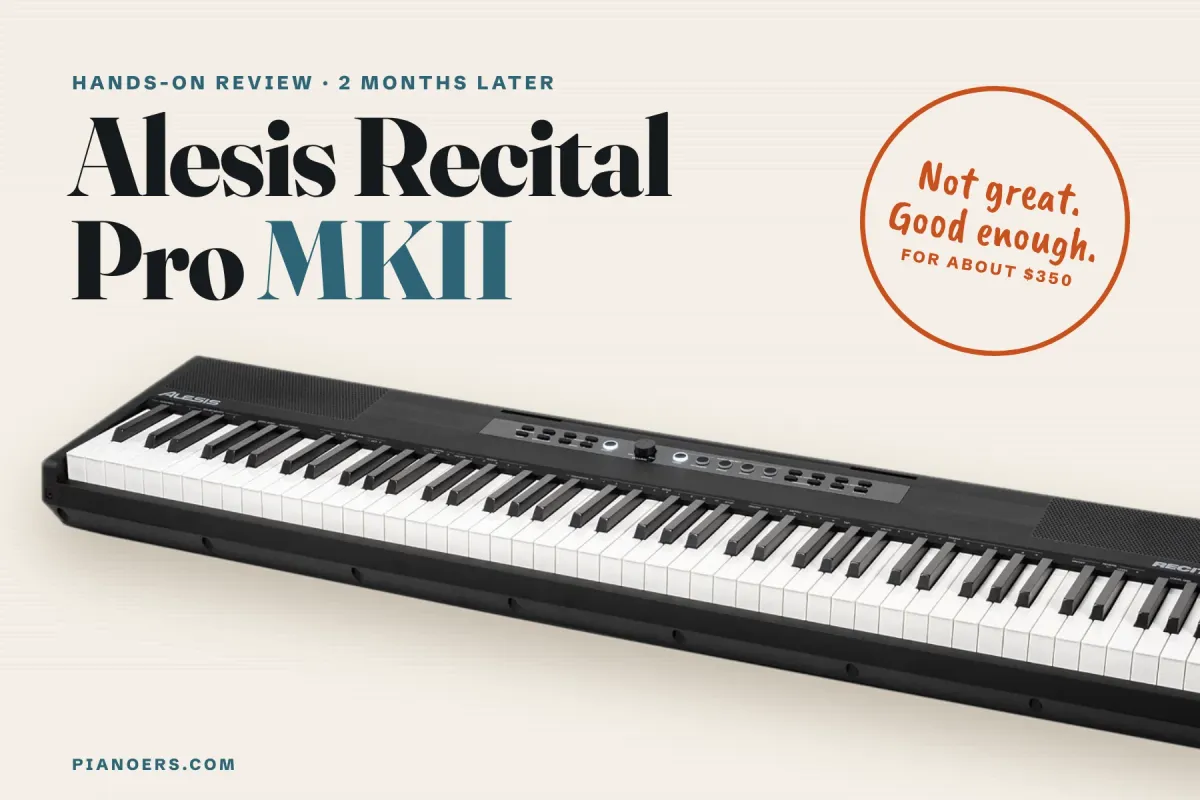
88 weighted keys and a pedal for about $350. My honest Recital Pro MKII review after two months: not a great piano, but fair value for occasional players.
Some links on this page are affiliate links. If you buy through one, we may earn a small commission at no extra cost to you. It never decides what we recommend.
On this page
If you want 88 weighted keys for as little money as possible, the Alesis Recital Pro MKII is probably on your list. I bought one two months ago to find out whether it's a bargain or a false economy. The honest answer: it's not a great piano, but for about $350 it's enough, as long as you know what you're buying and who it's for.
Spoiler: if you play a few times a month and don't care much about tone, it'll do the job. If you're serious about learning, save up for a Yamaha P-145BT.
Quick answer
Is the Alesis Recital Pro MKII worth it?
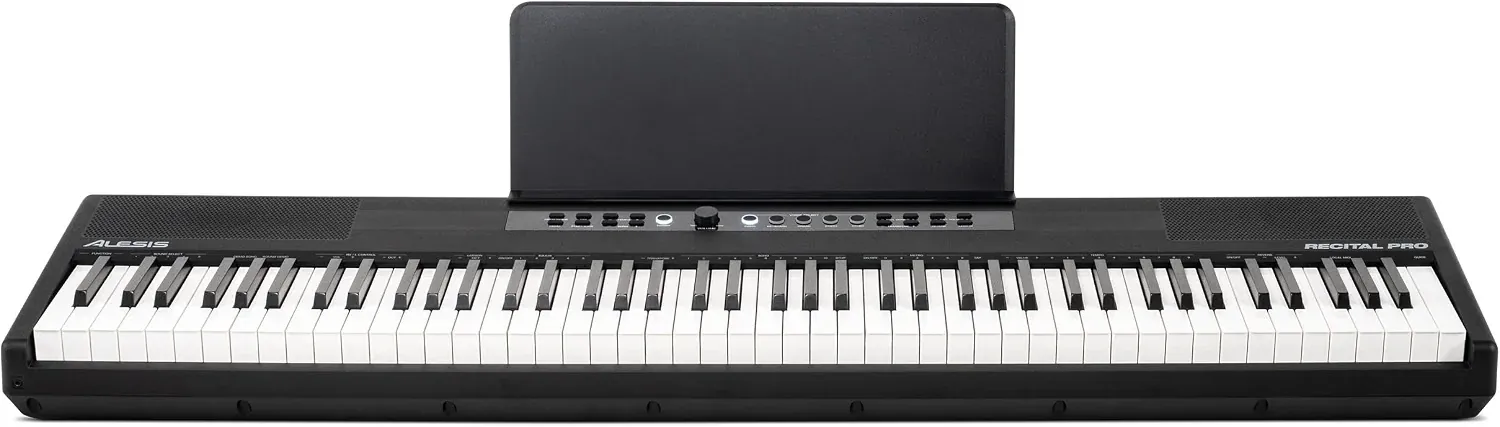
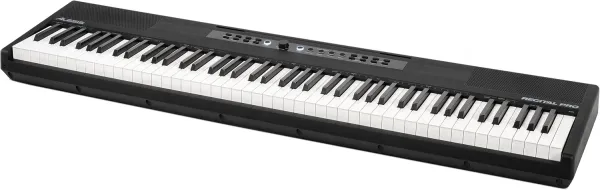
Yes, for occasional players on a tight budget. For about $350 you get 88 full-size hammer-action keys, a sustain pedal in the box, 2 × 10 W speakers, 25 sounds, USB audio and battery power. The trade-offs are real: the keys feel light and springy, the piano sound is flat next to Yamaha or Roland, and there's no Bluetooth. If you'll practice every day, spend the extra $150 on a Yamaha P-145BT.
My verdict on the Recital Pro MKII
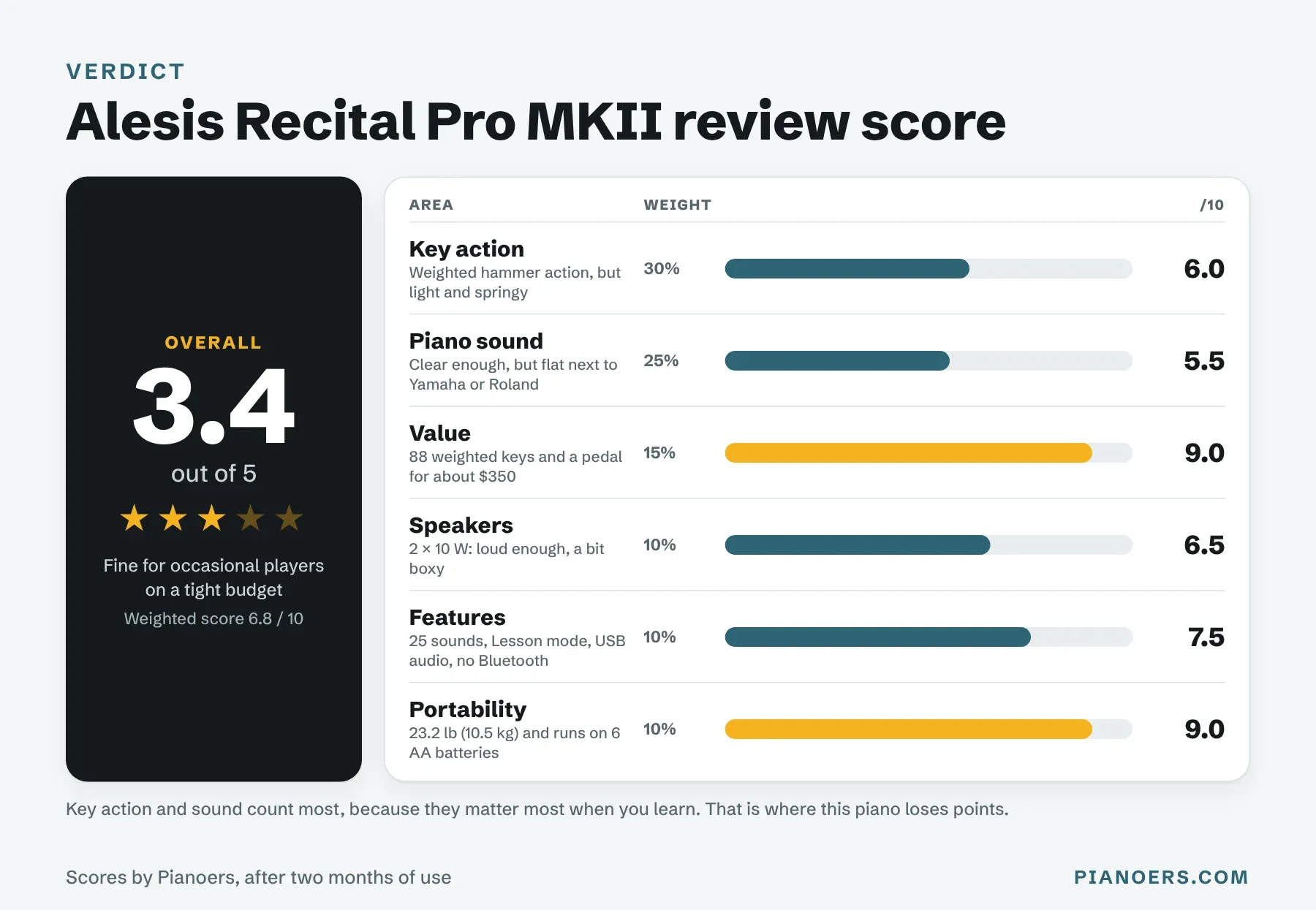
“Not a great piano. A very fair price.”
Verdict: The cheapest way I know to get 88 weighted keys and a pedal that won't feel like a toy, held back by a light, springy action and a flat piano sound.
- Action
- Hammer action
- Polyphony
- 64
- Bluetooth
- No
- Weight
- 23.2 lb
What I like
- 88 full-size weighted keys for about $350
- Sustain pedal and music rest in the box
- Runs on 6 AA batteries
- USB audio and MIDI with one cable
What bugs me
- Light, springy keys with little grading
- Flat, thin piano sound
- Tiny footswitch pedal
- No Bluetooth at all
Alesis Recital Pro MKII specs
Everything that matters, checked against Alesis's own spec sheet.
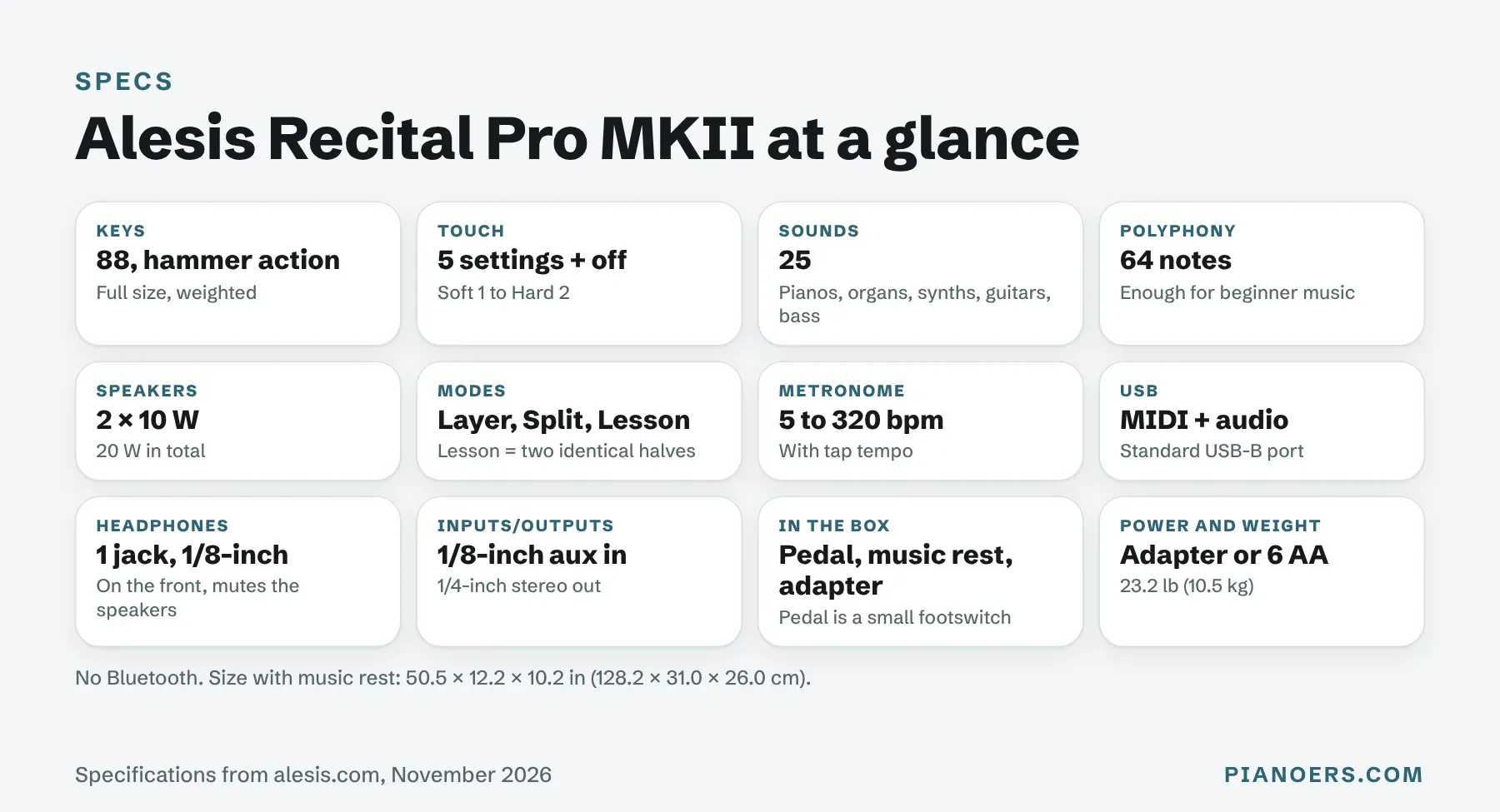
| Spec | Alesis Recital Pro MKII |
|---|---|
| Keys | 88 full-size, weighted hammer action |
| Touch response | 5 settings (Soft 1 to Hard 2), plus off |
| Sounds | 25: pianos, electric pianos, organs, harpsichord, vibraphone, strings, synths, guitars and basses |
| Polyphony | 64 notes |
| Modes | Layer, Split, Lesson (two identical halves) |
| Metronome | 5 to 320 bpm, with tap tempo |
| Speakers | 2 × 10 W (20 W total) |
| Bluetooth | None |
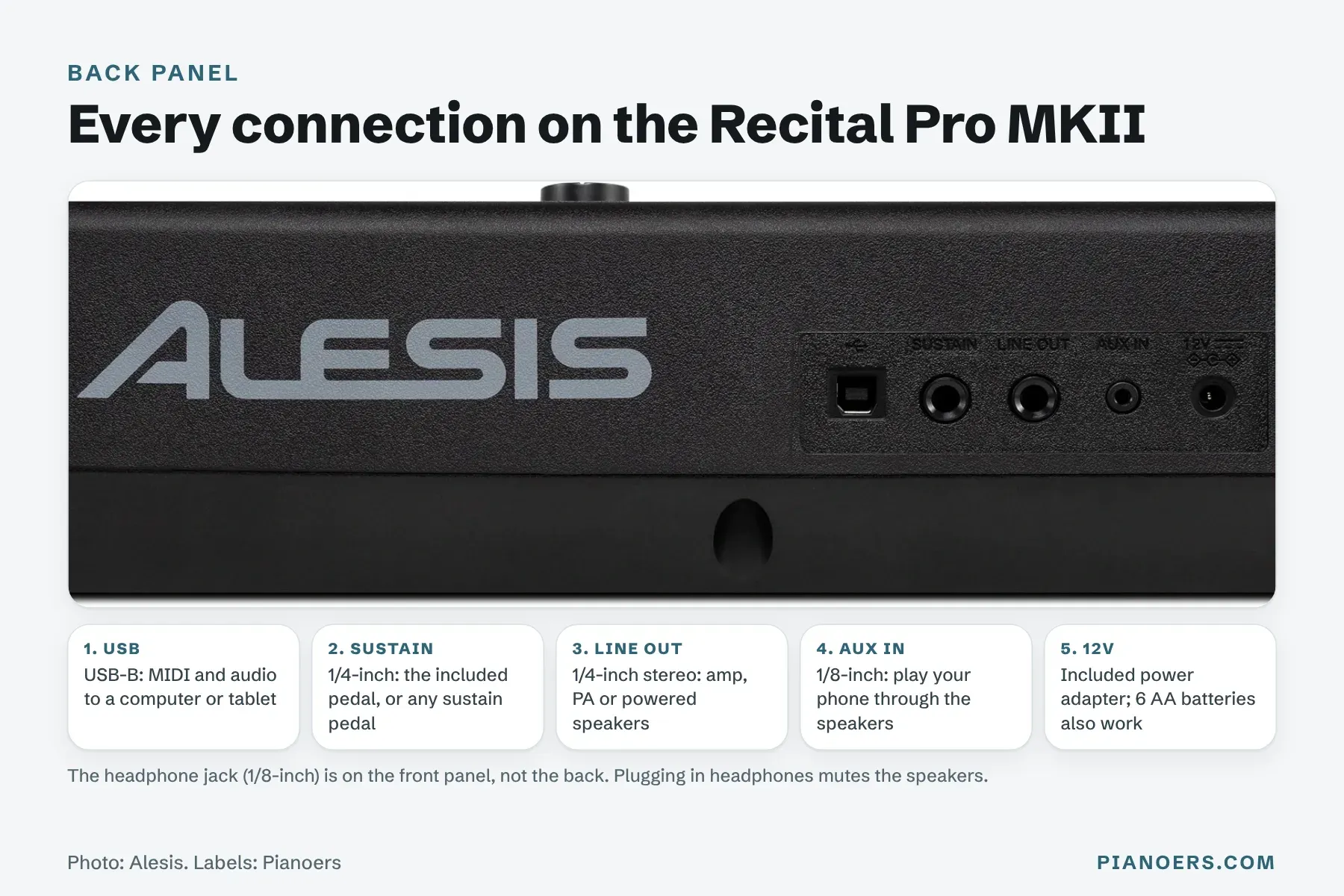
| Connections | USB-B (MIDI and audio), 1/4-inch (6.35 mm) stereo out, 1/8-inch (3.5 mm) aux in, 1/4-inch pedal input, 1/8-inch headphone jack on the front |
| In the box | Sustain pedal (footswitch), music rest, power adapter |
| Power | 12 V adapter or 6 AA batteries |
| Size | 50.5 × 12.2 × 10.2 in (128.2 × 31.0 × 26.0 cm) with music rest |
| Weight | 23.2 lb (10.5 kg) |
| Price | About $350 in the US |
How the keys feel
This is where the money was saved. The Recital Pro MKII has proper full-size, weighted hammer-action keys, and that's the main reason to buy it over a cheap 61-key keyboard. Your fingers are working against real resistance, so you build strength that carries over to any piano later.
But next to a Yamaha P-145 or a Roland FP-10, the keys feel light and a bit springy. They push back up quickly rather than settling like a real piano key. Alesis says the action is graded (heavier in the bass, lighter in the treble). Honestly, I struggle to feel much difference from one end to the other.
For chords, pop songs and simple melodies, it's fine. Where it falls short is soft, controlled playing: getting a quiet, even line in a slow piece is harder than it should be. The five touch settings help a little. If you play gently, try Soft 1 or Soft 2; it takes less force to get a full sound.
How it sounds
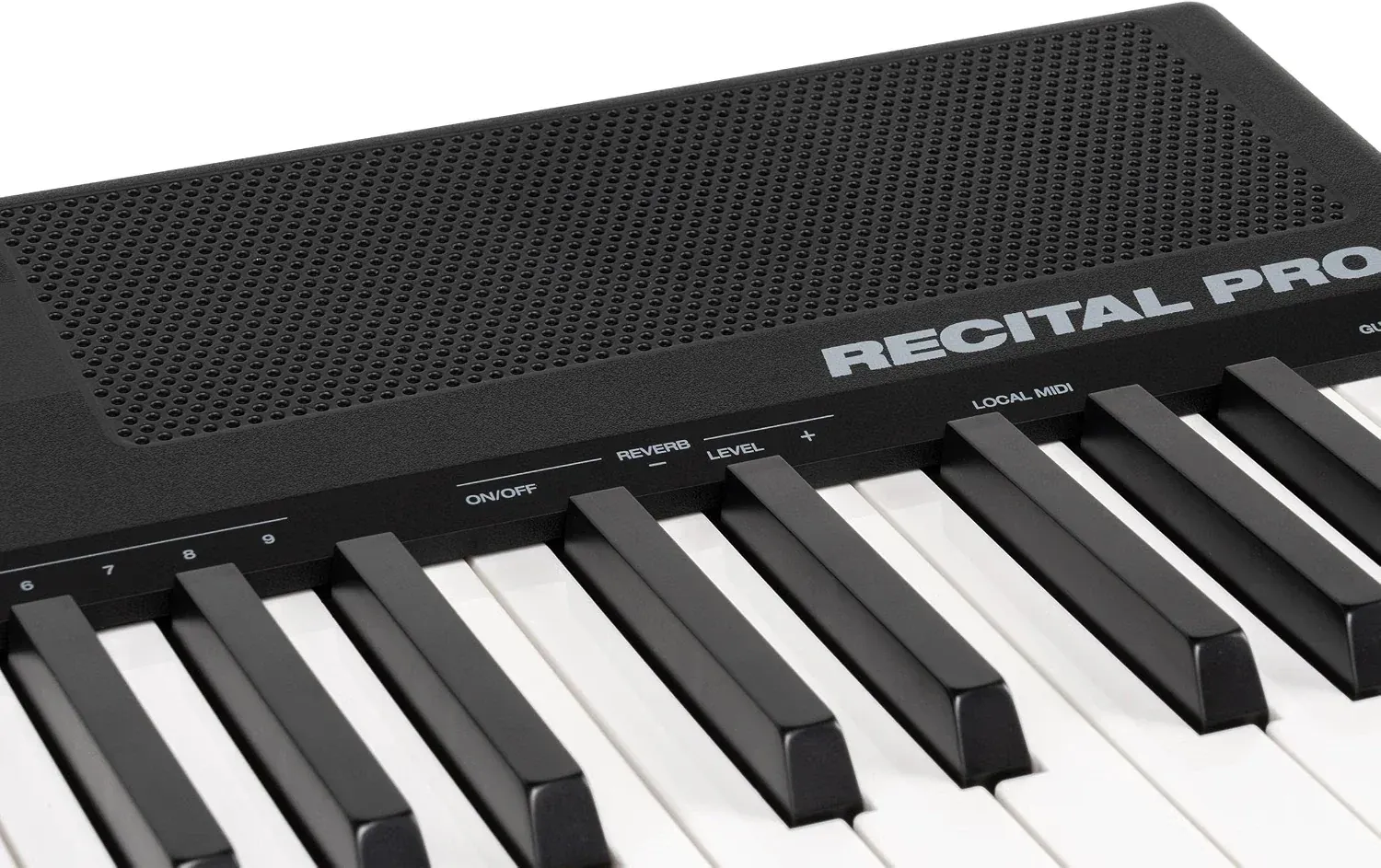
The main piano sound, called German Grand, is clear and in tune, and it does the job for practice. It just doesn't have much life in it. Play softly and loudly and the tone doesn't change as much as it does on a Yamaha or a Roland; it mostly just gets louder. Long notes with the pedal down also sound a bit flat and electronic.
The 2 × 10 W speakers are loud enough to fill a bedroom or living room, louder than you'll need most of the time. Turn them up and the sound gets a little boxy, but it doesn't distort. Through decent headphones the piano sounds noticeably better, and that's how I'd practice on it.
You get 25 sounds in all. The electric pianos and organs are fun for pop and worship songs, and Layer mode (strings under piano) makes simple songs sound bigger. Some of the others, like the guitars, are there to fill out the list.
And 64-note polyphony? Alesis halved it from the original Recital Pro's 128. For beginner music, you won't notice. Fast pedaled passages may cut off notes later on, but by then you'll have outgrown this piano anyway.
The pedal in the box
Good news first: unlike the original Recital Pro, the MKII comes with a sustain pedal. The less good news: it's a small, square footswitch. It's light, it slides across the floor, and it's on or off with nothing in between.
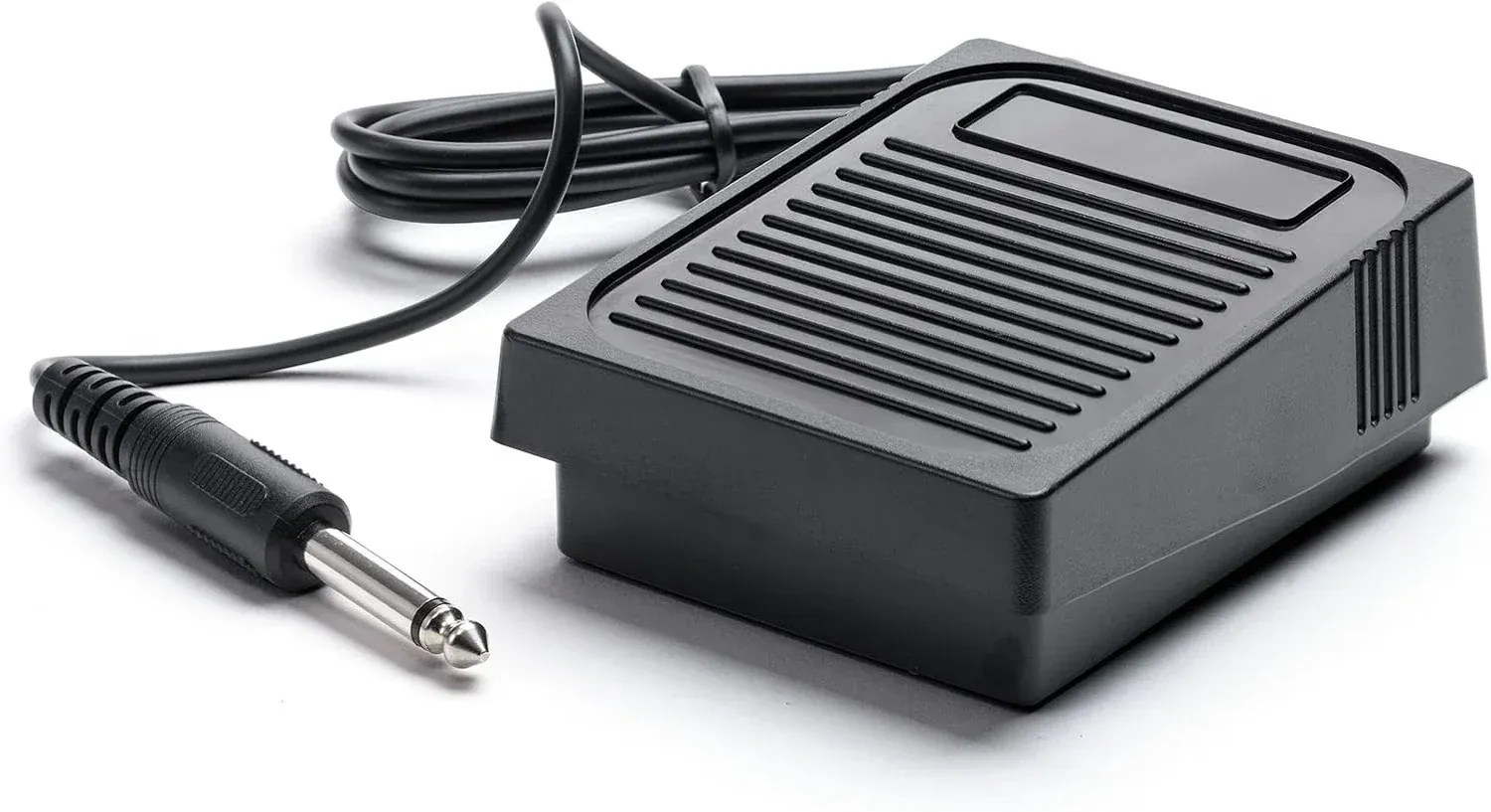
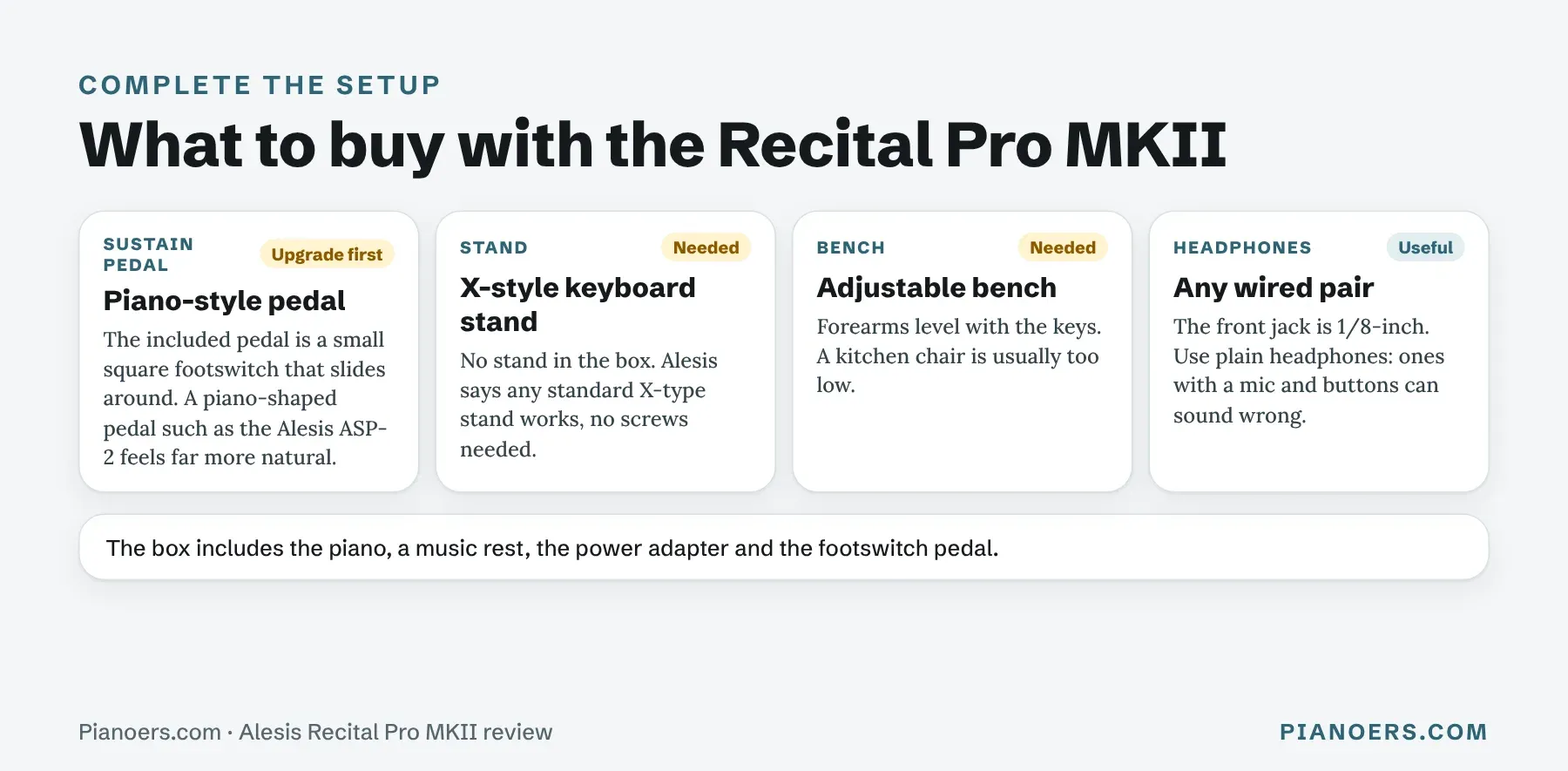
It works, and for occasional playing it's fine. If you start using the pedal a lot, a piano-shaped pedal (the Alesis ASP-2 or any universal sustain pedal) is the single best upgrade you can make. If a new pedal works backwards, flip its polarity switch, or hold it down while you plug it in.
Features that actually help
- Lesson mode splits the keyboard into two identical halves, same sound and pitch, so a teacher, parent or friend can play side by side.
- Metronome from 5 to 320 bpm with tap tempo. Use it. Slow, steady practice with a metronome is how beginners get better fastest; I explain how in my practice tips.
- USB audio and MIDI through one USB-B cable. It works with learning apps on a computer or tablet (with the right adapter), and you can record into GarageBand or any recording software.
- Aux in (1/8-inch): plug in your phone with a cable and play along with songs or lessons through the piano's speakers. It's the stand-in for Bluetooth, which this piano doesn't have.
- Battery power (6 AA). Handy if you want to play on a porch or in a room without a handy outlet.
- Free lessons: three months of Skoove Premium and a 30-day Melodics trial. Skoove is worth trying first; I cover it in my Skoove review.
One gotcha: the front headphone jack is 1/8-inch and mutes the speakers. Alesis recommends plain headphones; earbuds with a mic and buttons can sound odd through it.
Recital Pro MKII vs Recital Pro vs Yamaha P-145BT
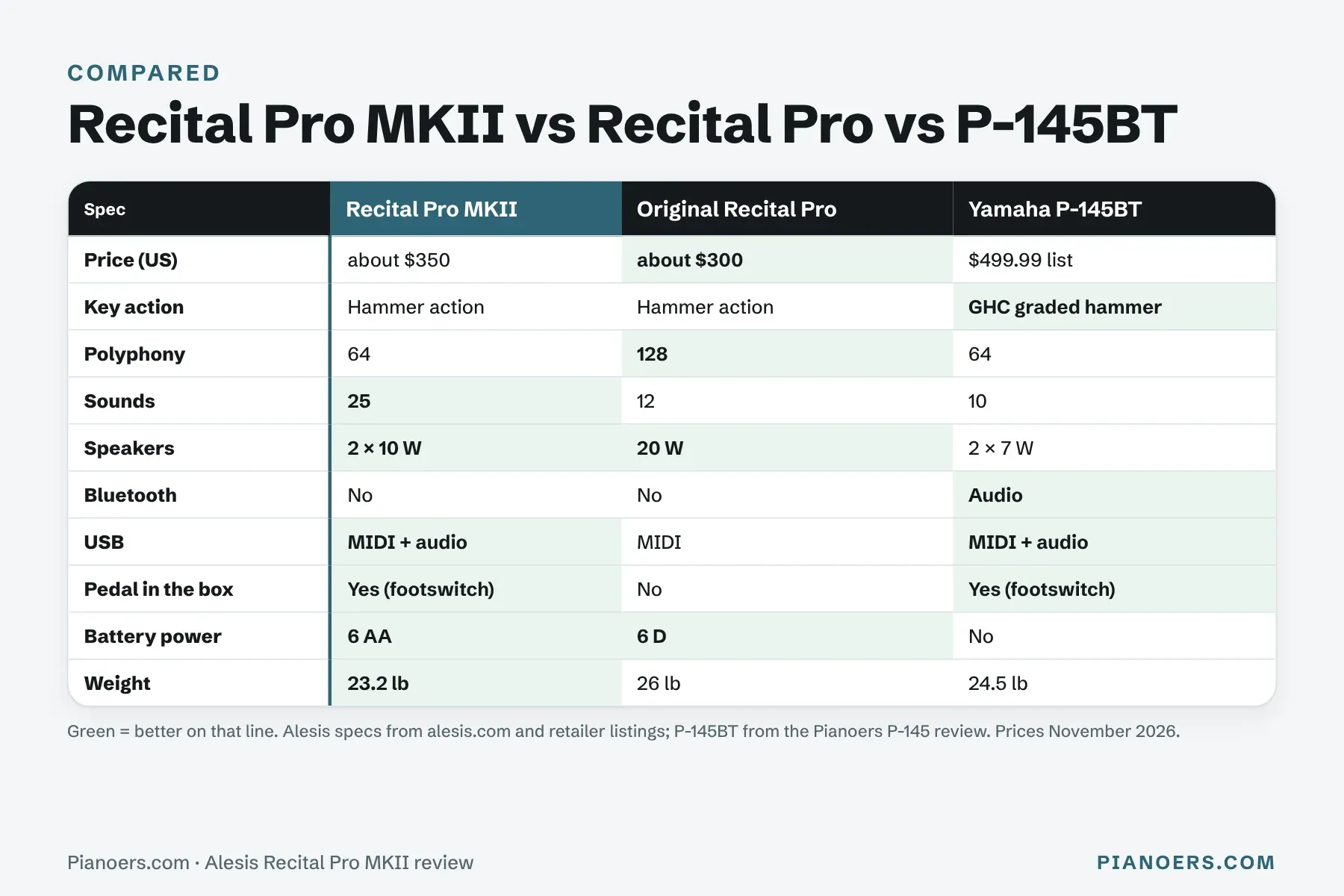
MKII vs the original Recital Pro
The MKII is the one to buy. It adds a sustain pedal in the box, 25 sounds instead of 12, USB audio, a tap-tempo metronome and lighter AA battery power, and it weighs about 3 lb less. The only spec that went backwards is polyphony (64 instead of 128), which a beginner won't notice. Leftover stock of the original is worth it only if it's clearly cheaper, and remember to add the cost of a pedal.
MKII vs the Yamaha P-145BT
This is the real decision. The P-145BT costs about $150 more, and that money goes exactly where the Alesis is weakest: a better-feeling, properly graded key action, a richer piano sound, and Bluetooth audio for streaming lessons and songs. The Alesis wins on battery power, more sounds and price.
- Playing a few times a month, budget capped at about $350? → the Recital Pro MKII.
- Playing most days, or taking lessons? → the Yamaha P-145BT. You'll keep it for years.
Still deciding? My best beginner keyboards and digital pianos guide ranks all the options under about $750.
Who should buy the Alesis Recital Pro MKII?
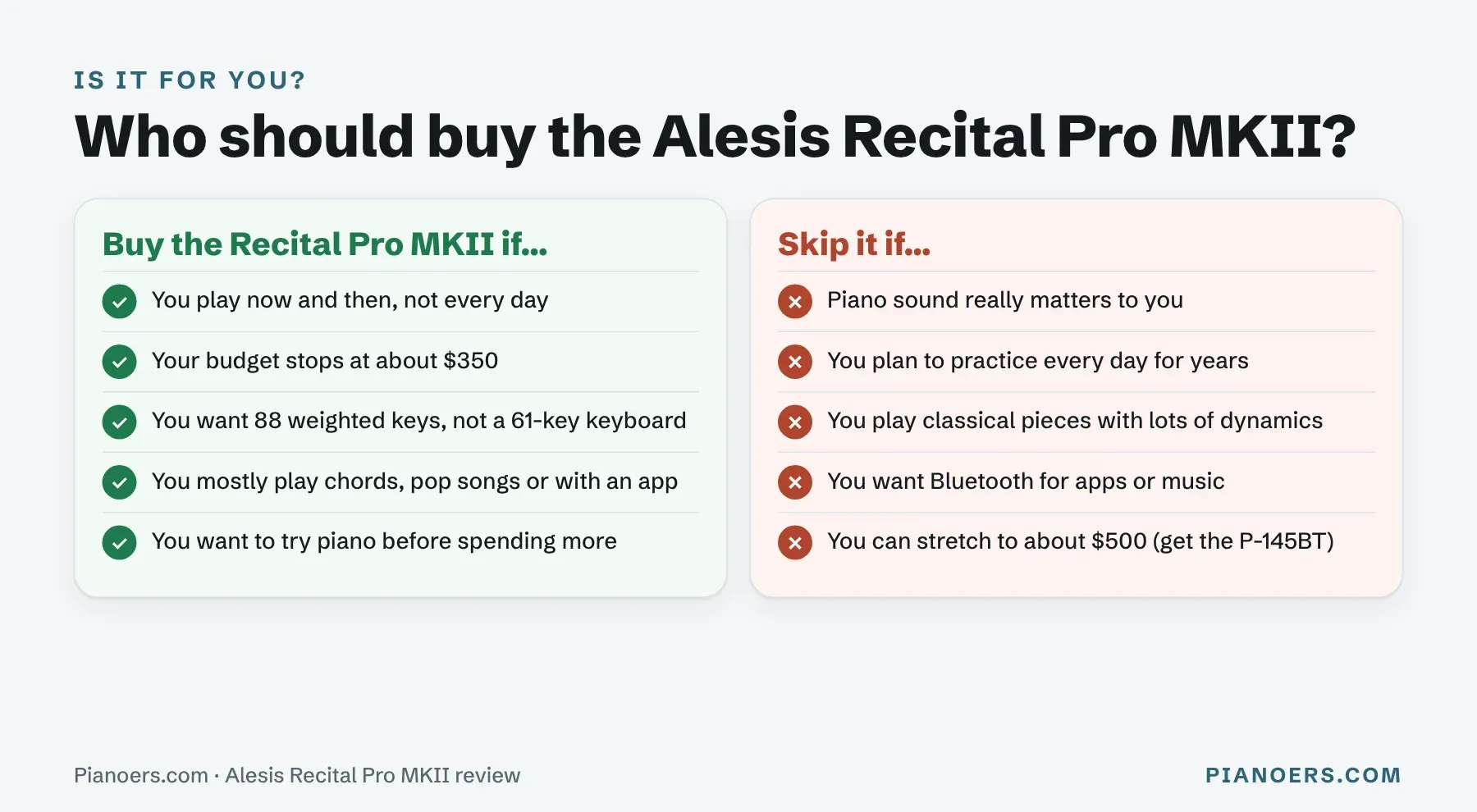
Buy it if you're an adult who plays now and then, a parent testing whether a child sticks with piano, or someone who wants weighted keys in a spare room without spending $500. It's also a fine second piano for a holiday home, since it runs on batteries.
Skip it if sound matters to you, you plan to practice daily, or you're working through classical pieces where soft playing and pedaling matter. In those cases this piano will hold you back within months.
Alesis Recital Pro MKII pros and cons
Pros
- 88 full-size weighted keys for about $350
- Sustain pedal, music rest and adapter included
- Loud 2 × 10 W speakers
- 25 sounds with Layer, Split and Lesson modes
- USB audio and MIDI, plus aux in for your phone
- Runs on 6 AA batteries; light at 23.2 lb
Cons
- Light, springy action with little grading
- Flat piano sound that doesn't change much with how hard you play
- Small footswitch pedal, no half-pedaling
- No Bluetooth (audio or MIDI)
- 64-note polyphony, down from 128
- No stand in the box
My verdict after two months
The Recital Pro MKII does what it promises: real-size weighted keys, a pedal and decent speakers for about $350. Two months in, nothing has broken, the speakers are plenty loud, and it's light enough that I move it around the house without thinking about it.
But every time I sit down at it after a Yamaha or a Roland, I notice the springy keys and the flat sound. That's the trade. If you only play now and then and just want something with proper keys, I think it's fair value. If you're serious, it's a false economy; get the P-145BT or the Roland FP-10 and you won't need to upgrade.
New to piano? Start with my piano basics guide, then follow the plan in how to teach yourself piano.
Alesis Recital Pro MKII FAQ
Is the Alesis Recital Pro MKII good for beginners?
Yes, for casual beginners on a budget. It has 88 full-size weighted keys, a pedal and a metronome, which is everything you need to start. The light, springy keys and flat piano sound make it a weaker choice if you plan to practice daily or take lessons.
Does the Alesis Recital Pro MKII have weighted keys?
Yes. It has 88 full-size weighted hammer-action keys with five touch-response settings. They feel lighter and springier than the keys on a Yamaha P-145 or Roland FP-10.
What's the difference between the Recital Pro and the Recital Pro MKII?
The MKII adds a sustain pedal in the box, 25 sounds instead of 12, USB audio, a tap-tempo metronome and AA battery power, and it weighs about 3 lb less. The original has 128-note polyphony; the MKII has 64.
Does the Recital Pro MKII have Bluetooth?
No. It has no Bluetooth audio or MIDI. Use a USB cable for learning apps and recording, and the 1/8-inch aux input to play music from your phone through its speakers.
Does the Recital Pro MKII come with a sustain pedal?
Yes. It comes with a small footswitch-style sustain pedal, a music rest and a power adapter. A piano-shaped pedal such as the Alesis ASP-2 feels more natural and is the first upgrade worth making.
Can the Recital Pro MKII run on batteries?
Yes. It runs on six AA batteries (not included) or on the included power adapter.
How much does the Alesis Recital Pro MKII weigh?
It weighs 23.2 lb (10.5 kg) with the music rest, and measures 50.5 × 12.2 × 10.2 inches.
Alesis Recital Pro MKII or Yamaha P-145: which should I buy?
The Yamaha P-145BT if you can spend about $500: its keys and piano sound are clearly better, and it has Bluetooth audio. The Recital Pro MKII if your budget stops at about $350 and you only play occasionally.
Does the Recital Pro MKII work with piano learning apps?
Yes, over USB. It sends MIDI and audio through one USB-B cable, so it works with apps like Skoove on a computer or tablet. Three months of Skoove Premium and a Melodics trial are included.

Comments ()