
7 Best Beginner Keyboard & Digital Pianos in 2026 🎹 (That I've Actually Played)
Best beginner keyboard pianos of 2026, picked by a piano teacher since 2001: 7 weighted 88-key digital pianos from $400 to $730. Find the one for you.
On this page
Last updated October 6, 2026. Prices checked October 6, 2026.
So you wanna learn piano. Awesome decision.
But now you're staring at a million options online, Yamaha this, Roland that, and wondering: Which one won't suck? Or worse, which one will make me quit in a month because it feels like tapping on cardboard?
I've been there. I've tested tons of beginner-friendly digital pianos over the years (and yeah, I've got opinions). Whether you're a total newbie or just getting back into it, here's a deep dive into the best beginner pianos that are actually fun to play, and won't kill your budget.
Quick note on wording: lots of people search for a "beginner keyboard piano," but what a beginner really wants is a digital piano, meaning a keyboard with 88 fully weighted keys. Every pick below is one.
Heads-up: some links on this page are Amazon affiliate links. If you buy through one, we may earn a small commission at no extra cost to you. It never decides which pianos make this list.
Quick answer
The best beginner keyboard piano for most people is the Yamaha P-145BT
It costs about $500 and has fully weighted keys, a clean piano tone and Bluetooth audio. On a tight budget, get the Alesis Recital Pro (about $400). If key feel matters most, the Roland FP-10 (about $499) has the same PHA-4 action as Roland's pricier FP-30X. For the best sound around $500, pick the Kawai ES60.
Piano finder
Find your piano in two taps
How to Choose a Beginner Keyboard Piano (Quick Version)
Before we get into specific picks, here are the things that actually matter:
Weighted keys are non-negotiable. Semi-weighted or unweighted keys will teach your fingers all the wrong habits. If you want to develop real technique and eventually play an acoustic piano, you need fully weighted, hammer-action keys. No exceptions. For a deeper look at this, check out our acoustic vs digital piano guide.
88 keys. If you get a 61-key keyboard, you'll hit a wall fast. Full-size keys help you build real technique from day one.
Sound quality matters more than sound quantity. You don't need 500 voices. You need one really good piano voice. Everything else is a bonus.
Budget sweet spot: $400–$500. That's where you get fully weighted keys and a good piano sound. Below about $400, you're making real compromises on key feel. From $500 to $750 you're paying for extras like Bluetooth audio and better speakers (great if you can swing it, but not necessary to start). Spending more than that? See my best digital pianos guide.
App connectivity makes practice more fun. Being able to connect your piano to learning apps like Simply Piano, Flowkey, or GarageBand keeps you coming back to the keys. Look for USB-MIDI at minimum, Bluetooth MIDI if you can get it.
Got it? Good. Let's get into the pianos.
Best Beginner Pianos (Quick Comparison)
| Model | Price | Keys | Polyphony | Bluetooth | Weight | Best For |
|---|---|---|---|---|---|---|
| Yamaha P-145BT | ~$500 | 88 weighted (GHC) | 64 | Audio | 24 lbs | Best all-around |
| Alesis Recital Pro | ~$400 | 88 hammer-action | 128 | No | 26 lbs | Best on a budget |
| Kawai ES60 | ~$450–$550 | 88 weighted (RHL) | 192 | No | 24 lbs | Best sound quality |
| Roland FP-10 | ~$499 | 88 weighted (PHA-4) | 96 | MIDI only | 28 lbs | Best key feel |
| Korg B2 | ~$500 | 88 weighted (NH) | 120 | No | 25 lbs | Best simplicity |
| Roland FP-30X | ~$650–$700 | 88 weighted (PHA-4) | 256 | Audio + MIDI | 33 lbs | Best for growth |
| Casio PX-S1100 | ~$730 | 88 weighted (SSHA) | 192 | Audio + MIDI (included adapter) | 25 lbs | Best for small spaces |
How I Tested These Pianos
I'm Katarina, a piano teacher since 2001 with a B.A. in music from the University of Missouri. Here's what I judged them on:
- Key feel first. I play the same pieces on every model.
- Sound through speakers and headphones. Some pianos sound great through one and odd through the other, and beginners practice on headphones a lot.
- Beginner setup. How easy it is to plug in, change sounds and connect apps like Simply Piano and Flowkey.
- Value. Is there a cheaper piano that does 90% of what this one does?
Yamaha P-145BT
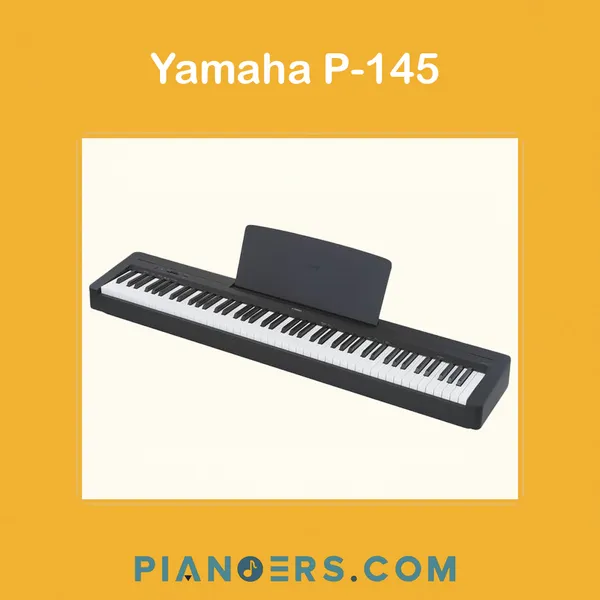
“Simple. Reliable. Kinda like the Honda Civic of beginner pianos.”
Verdict: The Yamaha P-145BT is the best all-around beginner digital piano: reliable GHC weighted keys, a clean concert-grand piano voice and Bluetooth audio for about $500.
- Action
- GHC weighted
- Polyphony
- 64
- Bluetooth
- Audio
- Weight
- 24 lbs
Why it's here
- Feels close to an acoustic without being stiff
- Simple layout with no distracting buttons
- Bluetooth audio for lessons and backing tracks
Watch out for
- Speakers are just okay
- 64-note polyphony is the lowest on this list
Why I Recommend It: This thing just feels right. Weighted keys that give you feedback without being stiff, clean piano tone, and a layout that doesn't try to impress you with a billion flashing buttons. It's like Yamaha knew exactly what you needed and nothing more.
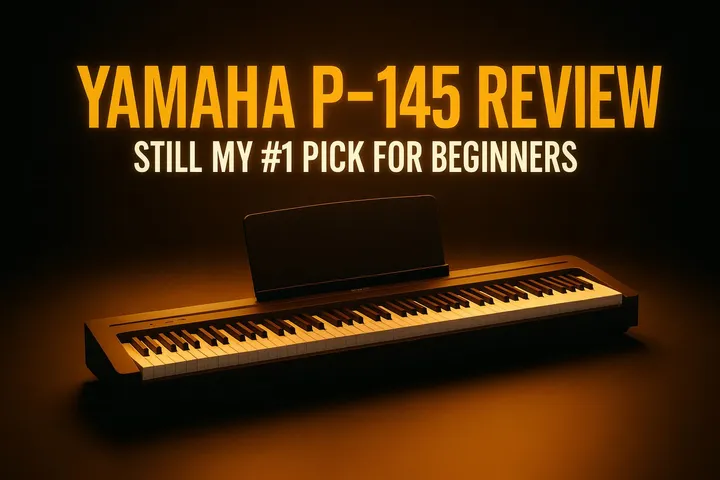
The P-145 has been my go-to recommendation for over a year now, and Yamaha just made it even better by releasing the P-145BT with built-in Bluetooth audio. Same exact piano, same keys, same sound, but now you can wirelessly stream Spotify, YouTube lessons, or backing tracks straight through the piano's speakers. For about $50 more than the original, it's a no-brainer upgrade. If you want the full breakdown, read my Yamaha P-145 / P-145BT review.
What It Has:
- 88 full-sized weighted keys (GHC action)
- Yamaha CFIIIS concert grand piano voice
- 10 instrument voices
- 64-note polyphony
- Bluetooth audio (BT model) for wireless streaming
- USB to Host for app connectivity
- Built-in speakers (7W + 7W)
- Damper Resonance DSP
- Compatible with Yamaha Smart Pianist app
- Just 24 lbs
Best For: Anyone who wants a solid, no-fuss practice piano that feels close to an acoustic.
Downsides? The speakers are just okay. Nothing spectacular. And 64-note polyphony is the lowest on this list, though beginners will never notice the limit. The original P-145 (without Bluetooth) is getting harder to find new, so go for the BT version.
My Take: If you want to learn piano and you're not interested in shiny gimmicks, this is your jam. It's durable, portable, and feels like a real instrument. The BT version fixes the only thing the original was missing.
Alesis Recital Pro
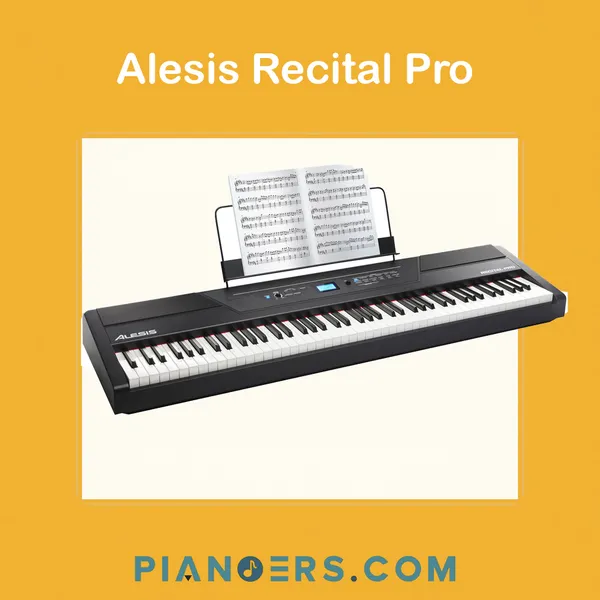
“The best cheap digital piano that doesn't feel like a toy.”
Verdict: The Alesis Recital Pro is the cheapest digital piano I'd recommend to a beginner: 88 hammer-action keys and 128-note polyphony for about $400, with a less refined feel than Yamaha or Roland.
- Action
- Hammer action
- Polyphony
- 128
- Bluetooth
- No
- Weight
- 26 lbs
Why it's here
- Real hammer-action keys at the lowest price here
- Lesson, split and layer modes
- 128-note polyphony
Watch out for
- Key feel less refined than Yamaha or Roland
- Sound is okay, not “wow”
Why I Recommend It: I was shocked how playable this thing is for the price. The keys are hammer-action (not just semi-weighted) and it comes loaded with features that make it perfect for total beginners. At about $400, it's by far the cheapest piano on this list that I'd actually recommend. Alesis has since released a Recital Pro MKII (25 voices, 64-note polyphony, USB audio); this review covers the original, which is still widely sold.
What It Has:
- 88 full-sized hammer-action keys
- 12 voices (including organ, synth, etc.)
- Lesson mode, split mode, and layer mode
- 128-note polyphony
- Built-in speakers and headphone output
- USB-MIDI for app connectivity
- 26 lbs
Best For: Absolute beginners on a tight budget, parents buying a first piano for their kids, or someone testing the waters before committing.
Downsides? Key feel isn't ideal for advanced players, and the sound is okay but not "wow." The hammer action doesn't feel as refined as Yamaha or Roland in this range. Still, for about $400? This is crazy value.
My Take: Not perfect, but 100% playable and surprisingly capable. An awesome entry point if you're not ready to invest in a higher-end model yet. Think of it as training wheels that actually work.
Kawai ES60
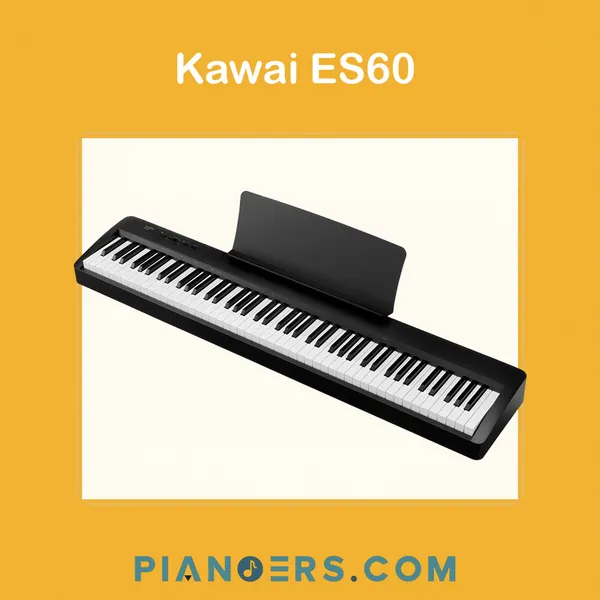
“The newcomer that sounds like a concert grand. No, seriously.”
Verdict: The Kawai ES60 has the best piano sound of any beginner piano here, built on Shigeru Kawai SK-EX concert grand samples for about $450–$550, but it has no Bluetooth.
- Action
- RHL graded
- Polyphony
- 192
- Bluetooth
- No
- Weight
- 24 lbs
Why it's here
- Shigeru Kawai SK-EX concert grand samples
- 192-note polyphony
- Stereo line outputs, rare at this price
Watch out for
- No Bluetooth, so apps need a cable
- No built-in recorder
Why I Recommend It: The ES60 is the most affordable model in Kawai's ES series, and it might be the best-sounding beginner piano you can buy right now. The secret is the sound source: it uses samples from the Shigeru Kawai SK-EX, a handmade concert grand that professional pianists perform on in recital halls around the world. You're hearing that piano through an instrument that sells for about $450–$550 (list price $599). It's kind of absurd.
The new Responsive Hammer Lite (RHL) action is smooth and comfortable with a nice graded feel. It's lighter than Roland's PHA-4, which some people will prefer and others won't. At just 24 lbs, it's also one of the most portable options on this list.
What It Has:
- 88 keys with Responsive Hammer Lite (RHL) graded action
- Shigeru Kawai SK-EX concert grand piano samples
- Harmonic Imaging sound engine
- 17 instrument voices
- 192-note polyphony
- Dual and Split playing modes
- 30 built-in drum rhythms
- USB-MIDI for app connectivity (works with Kawai PianoRemote app)
- Dedicated stereo line outputs (rare at this price)
- Built-in speakers (10W + 10W)
- 24 lbs
Best For: Beginners who prioritize sound quality above everything else. Also great for anyone who wants to buy into the Kawai ecosystem at an affordable price.
Downsides? No Bluetooth, so you'll need a wired connection for apps. The key action, while good, isn't as proven as Yamaha's GHC or Roland's PHA-4. And there's no built-in recording feature.
My Take: If piano tone is what makes you want to keep playing, the ES60 might be your best motivator. Kawai's been making pianos since 1927, and you can genuinely hear that heritage in every note. It's a stunning debut at this price.
Roland FP-10
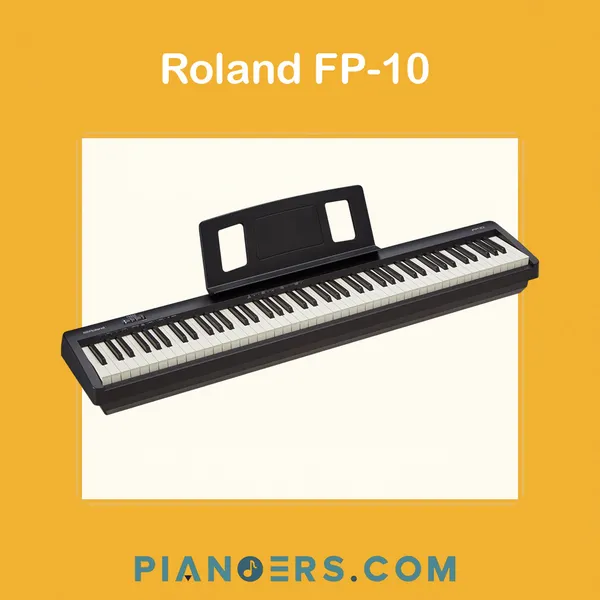
“Entry-level price, but definitely not entry-level keys.”
Verdict: The Roland FP-10 gives you the best key feel under $500, with the same PHA-4 Standard action as the FP-30X, in exchange for fewer sounds and small speakers.
- Action
- PHA-4 Standard
- Polyphony
- 96
- Bluetooth
- MIDI only
- Weight
- 28 lbs
Why it's here
- Same keys as Roland's pricier FP-30X
- SuperNATURAL piano tone
- Bluetooth MIDI for learning apps
Watch out for
- Only 15 sounds on the panel
- No Bluetooth audio, small speakers
Why I Recommend It: The FP-10 is Roland's cheapest 88-key digital piano, but here's the thing: it shares the exact same PHA-4 Standard key action as the more expensive FP-30X (which costs about $150 more). You're getting Roland's signature key feel at a fraction of the price. The trade-off? Fewer sounds, no Bluetooth audio, simpler speakers. But the keys (the most important part) are the real deal.
Roland's SuperNATURAL sound engine is in here too, giving you a clean and dynamic piano tone that responds beautifully to how hard or soft you play.
What It Has:
- 88 keys with PHA-4 Standard action
- Roland SuperNATURAL sound engine
- 15 tones (36 in total)
- 96-note polyphony
- Bluetooth MIDI (works with the Roland Piano App)
- USB to Host
- Built-in speakers (6W + 6W)
- 28 lbs
Best For: Complete beginners who want the best feeling keys they can get under $500. Also a solid choice for parents buying a first piano.
Downsides? Very basic feature set: only 15 sounds, no Bluetooth audio, and the speakers are small.
My Take: If key feel is your top priority and you don't care about extras, the FP-10 punches way above its weight. The PHA-4 action is genuinely impressive at any price, let alone under $500.
Korg B2
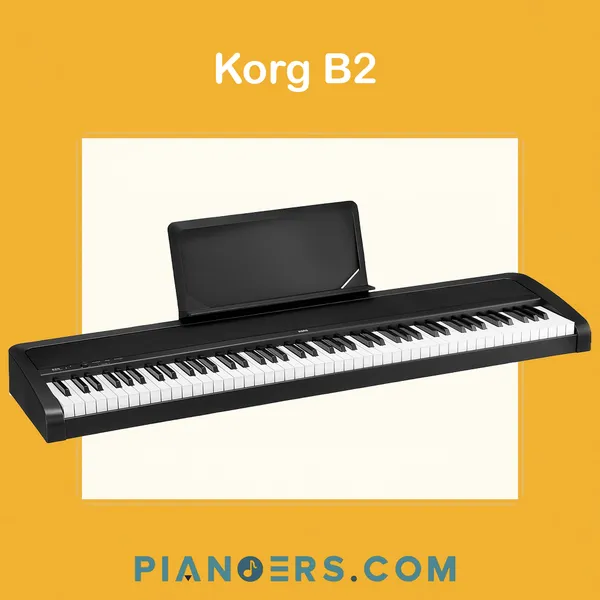
“Underrated. Super beginner-friendly and sounds better than expected.”
Verdict: The Korg B2 is the simplest piano on this list, with warm German and Italian grand samples and bundled lesson software, but stock is getting hard to find.
Sold out at Korg's US store; the B2+ replaces it
- Action
- NH weighted
- Polyphony
- 120
- Bluetooth
- No
- Weight
- 25 lbs
Why it's here
- Warm German and Italian grand pianos
- USB audio and MIDI
- Very simple to use
Watch out for
- Pedal jack only takes Korg pedals
- No Bluetooth
Why I Recommend It: Korg doesn't get as much love in the beginner space, but the B2 is a dark horse. It's simple, affordable, and sounds surprisingly warm. The German and Italian grand piano samples are beautiful for the price, and the Natural Weighted Hammer action provides a decent feel. Plus, it has USB connectivity to hook up learning apps like Flowkey or Simply Piano, and comes with a three-month Skoove trial.
What It Has:
- 88 keys with NH (Natural Weighted Hammer) action
- 12 built-in sounds (5 pianos, plus electric piano, organ, strings, harpsichord)
- 120-note polyphony
- USB Audio and MIDI
- Built-in speakers (15W + 15W)
- Includes a 3-month Skoove trial plus the KORG Module and KORG Gadget 2 Le apps
- 25 lbs
Best For: Beginners who want something basic, reliable, and musical without overcomplicating things.
Downsides? No Bluetooth. The proprietary pedal connector is frustrating (you can't use third-party pedals). And a heads-up: Korg's own US store now lists the B2 as sold out, and the newer B2+ (about $600 on sale) has taken its place, so availability is limited. Check stock before you fall in love with it.
My Take: Still a solid piano if you can find one at a good price. But with the Kawai ES60 selling for about $450–$550, the B2 faces stiff competition. If you're choosing between the two, the ES60 sounds better and has more polyphony.
Roland FP-30X
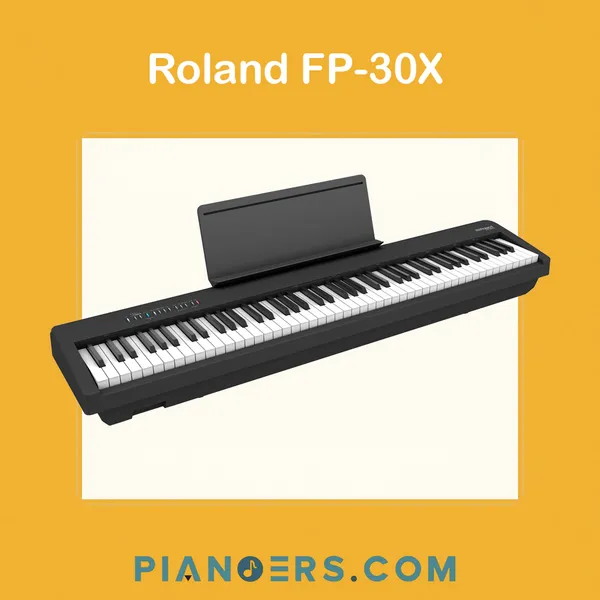
“Fancy, but not flashy. A future-proof pick if you're in it for the long haul.”
Verdict: The Roland FP-30X is the best buy-once beginner piano if you can spend about $650–$700: the same PHA-4 keys as the FP-10, plus Bluetooth audio and MIDI, 256-note polyphony and bigger speakers.
- Action
- PHA-4 Standard
- Polyphony
- 256
- Bluetooth
- Audio + MIDI
- Weight
- 33 lbs
Why it's here
- Bluetooth audio and MIDI
- 256-note polyphony, 56 sounds
- Bigger 11 W speakers
Watch out for
- About $250 more than the cheapest pick
- Button combinations for most settings
Why I Recommend It: The FP-30X is technically priced above the beginner range at around $650–$700, but I'm including it because it's the single best "buy once, don't upgrade for years" piano you can get. It uses the same PHA-4 Standard action as the FP-10 (escapement, Ivory Feel keytops), so you're not paying extra for better keys. You're paying for everything around them: Bluetooth audio, 256-note polyphony, 56 voices and much bigger speakers. That escapement, by the way, is the subtle "click" you feel when you press a key. It mimics what happens inside a grand piano.
And then there's Bluetooth. MIDI and audio. Wirelessly stream your favorite songs through the piano's speakers while you play along. Connect to Simply Piano or Flowkey without a single cable.
What It Has:
- 88 keys with PHA-4 Standard action (escapement + Ivory Feel keytops)
- Roland SuperNATURAL sound engine
- 56 instrument voices
- 256-note polyphony
- Bluetooth audio + Bluetooth MIDI
- Built-in recorder and metronome
- Built-in speakers (11W + 11W)
- 33 lbs
Best For: Intermediate beginners, adult learners, or tech-savvy players who want to grow into their instrument and not replace it in two years.
Downsides? At $650–$700, it costs about $250 more than the cheapest option on this list. It's also 33 lbs, so portability takes a small hit. And the user interface (button combinations for everything) is clunky.
My Take: If you can stretch your budget past $500, this is where the magic starts. The feel is genuinely impressive, and the Bluetooth audio alone makes practice sessions so much more fun. This piano grows with you. It's the one I recommend when someone says "I'm serious about this."
Casio Privia PX-S1100
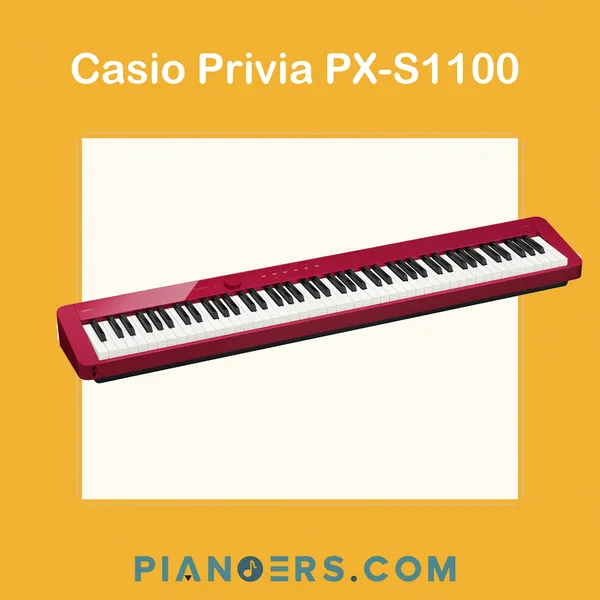
“Sleek and slim, but still plays like a beast.”
Verdict: The Casio Privia PX-S1100 is the best beginner piano for small spaces: one of the slimmest 88-key weighted pianos you can buy, with Bluetooth audio and MIDI, for about $730.
- Action
- Smart Scaled Hammer
- Polyphony
- 192
- Bluetooth
- Audio + MIDI (adapter)
- Depth
- 9.1 in
Why it's here
- About 9 inches deep and 25 lbs
- Bluetooth via the included adapter
- Black, white or red
Watch out for
- Priced alongside the FP-30X
- Touch controls take getting used to
Why I Recommend It: At around $730, the PX-S1100 isn't exactly a budget pick anymore. But I'm including it because nothing else on this list looks or feels quite like it. Casio knocked it out of the park here. This thing looks like it belongs in a design museum, but plays like a serious instrument. It's super slim (about 9 inches deep), yet the keys still have real hammer action. The piano tone is expressive, powered by Casio's Multi-Dimensional Morphing AiR sound engine, and the included Bluetooth adapter adds wireless audio and MIDI for playing along with your favorite songs.
What It Has:
- 88 fully-weighted keys (Smart Scaled Hammer Action)
- Multi-Dimensional Morphing AiR sound engine
- 18 instrument voices
- 192-note polyphony
- Bluetooth audio and MIDI (via the included WU-BT10 adapter)
- USB-MIDI
- Stylish design, available in black, white, or red
- 25 lbs
Best For: People with limited space, style-conscious players, and anyone who wants something portable and beautiful.
Downsides? At ~$730, it's priced alongside the FP-30X, which has better key action. Touch-sensitive controls instead of buttons take some getting used to. And the key action, while decent, doesn't feel quite as refined as the Roland PHA-4 or Kawai RHL in terms of realism.
My Take: If looks matter and you don't want to sacrifice feel or sound, this is a fantastic choice. Perfect for apartment living. The Bluetooth audio is a nice bonus for practice sessions.
Just Want a Keyboard to Try? (Kids and Tight Budgets)
Everything above has 88 weighted keys, because that's what you need to learn piano properly. But if you're buying for a young child, or you just want to find out whether you enjoy playing before spending $400 or more, a light portable keyboard is a reasonable first step. Plan to move up to one of the pianos above once lessons get serious.
- Casio Casiotone CT-S1 (about $220–$260): 61 full-size, touch-sensitive keys (not weighted), runs on six AA batteries, and weighs about 10 lbs.
- Yamaha NP-15 (about $270): 61 touch-sensitive keys, 15 voices and a slim 11.5-lb body that also runs on batteries.
- Korg Liano (about $400): all 88 keys in a 13-lb body that runs up to 8 hours on batteries, but the keys are light-touch, not weighted, so treat it as a stepping stone, not a practice piano.
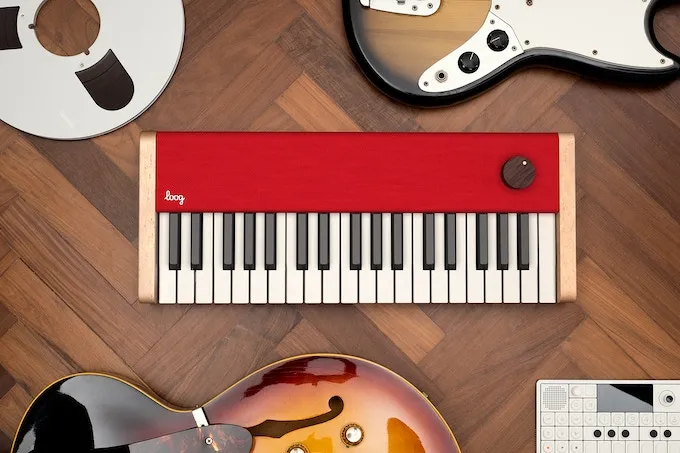
For very young kids, also read our Loog Piano review.
Bonus: Don't Ignore These Tips
1. Headphone jack = peace. Seriously. Practice without bugging the whole house. Every piano on this list has one.
2. Buy a stand and pedal. A proper stand (not an X-stand) and a sustain pedal will make your setup way more comfortable and realistic. Most of these pianos come with a basic pedal, but upgrading to a proper one later makes a real difference.
3. Try before you buy (if possible). Key action is a deeply personal thing. What feels perfect to me might feel too heavy or too light for you. Hit up a Guitar Center or local music store and play a few models. If you can't, buy from a retailer with a good return policy.
4. Don't sleep on learning apps. Pairing your piano with an app like Flowkey, Simply Piano, or Pianoforall makes the first few months so much more enjoyable. If your piano has Bluetooth MIDI or USB, you're set. Check out our best free piano learning apps for more options.
5. Avoid no-name brands. Those suspiciously cheap "88-key weighted pianos" from unknown brands on Amazon? They cut corners on key action and sound quality. You'll notice within a week, and you'll want to upgrade within a month. Stick to Yamaha, Roland, Kawai, Casio, Korg, or Alesis.
Frequently Asked Questions
How much should a beginner spend on a digital piano? $400 to $500 covers most beginners. That gets you fully weighted keys and a good piano sound. Under $400 you start compromising on key feel, and the Alesis Recital Pro is about as low as I'd go. If you can stretch to around $700, the Roland FP-30X adds Bluetooth audio, better speakers and more voices on the same keys as the Roland FP-10.
Do I need 88 keys as a beginner? Strongly recommended, yes. Most piano music uses the full range, and even if you don't need all 88 keys right away, you'll grow into them fast. Starting on a 61-key keyboard can build habits that are hard to break later.
What's the difference between a keyboard and a digital piano? A keyboard usually has unweighted or semi-weighted keys and focuses on having lots of sounds and rhythms. A digital piano focuses on replicating the feel and sound of a real acoustic piano with fully weighted keys. If your goal is to learn piano, get a digital piano. For a deeper dive, check out our piano basics guide.
Can I learn piano on a digital piano instead of an acoustic? Absolutely. Digital pianos are actually better for learning in many ways. You can practice with headphones at any hour, connect to learning apps, record yourself, and use the built-in metronome. Most piano teachers are perfectly happy with students practicing on a quality digital piano. We break this down fully in our acoustic vs digital piano comparison.
Are weighted keys really that important for beginners? Yes. 100%. Weighted keys build proper finger strength and technique from day one. If you practice on unweighted keys, your fingers won't develop the control needed for an acoustic piano. It's like training for a marathon in slippers.
Which brand makes the best beginner digital piano? They're all good at different things. Yamaha is the safest all-rounder. Roland has the best key feel for the money. Kawai has the best sound quality. Casio has the best design and portability. You really can't go wrong with any of them.
Is a 61-key keyboard OK for a child? For a young child or a just-curious beginner, a light 61-key keyboard like the Casio CT-S1 is fine for the first few months. Once lessons get serious, move to an 88-key digital piano with weighted keys, because unweighted keys don't build the finger control an acoustic piano needs.
Still Not Sure? Here's My TL;DR
If you're still stuck, here's my advice: don't overthink it. Pick one in your budget and just start playing.
- Best all-around: Yamaha P-145BT
- Tightest budget: Alesis Recital Pro
- Best sound: Kawai ES60
- Best key feel: Roland FP-10
- Simplest: Korg B2
- Worth the splurge: Roland FP-30X
- Smallest space: Casio PX-S1100
The real magic is in practice, not gear.
Send me a message if you want help picking one based on your space, goals, or learning style. Happy to help. Just promise me one thing:
Stick with it. Because piano is one of the most rewarding things you'll ever learn. And if you're just getting started, check out our articles on the best online piano lessons and how to teach yourself piano.
Comments ()